
Medigest

Advanced Endoscopy

ERCP: Endoscopic Retrograde Cholangio-Pancreatography

An endoscopic procedure to remove bile duct stones, relieve blockages and place stents - treating jaundice and cholangitis without open surgery.

  • Duration30-90 minutes
  • ComfortUnder sedation / anaesthesia
  • WhereHospital-based (Apollo Hospitals)
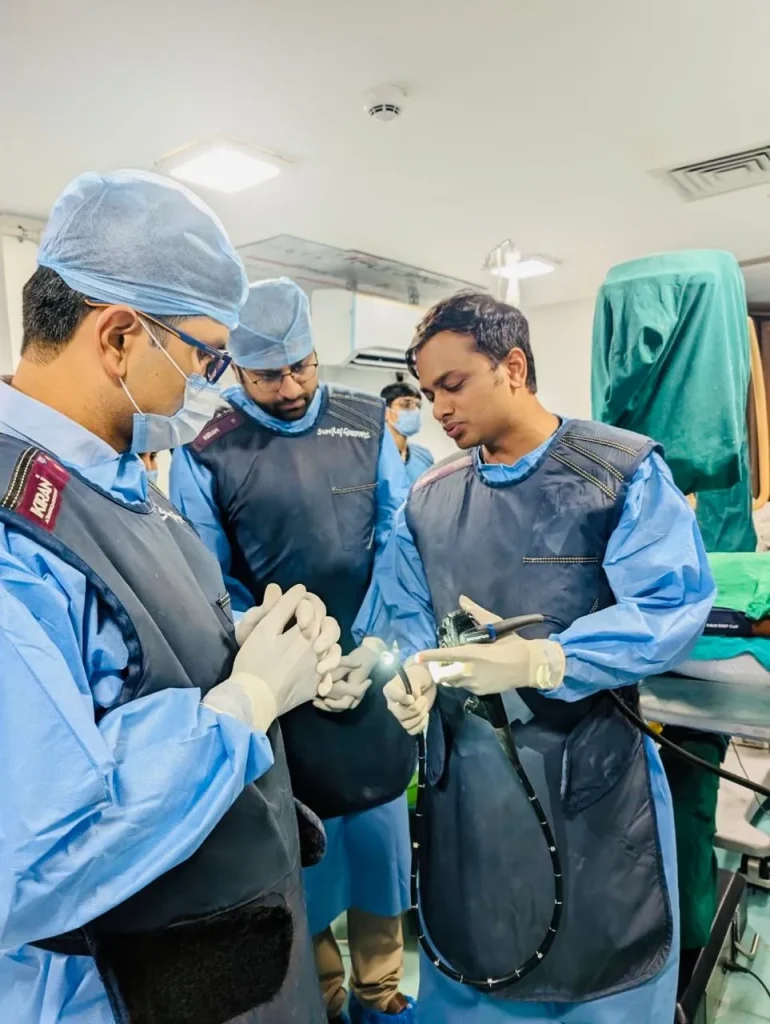
Advanced endoscopy (ERCP) procedure by Dr. Shrihari Anikhindi

Overview

What is ERCP?

ERCP combines endoscopy with X-ray imaging to examine and treat the bile ducts and pancreatic duct. A side-viewing endoscope is passed to the duodenum, where the bile duct opens. A thin catheter is passed into the duct and a contrast dye shows any stones, narrowing or blockage on X-ray.

Most ERCPs today are therapeutic: stones can be removed, narrowed ducts dilated, and plastic or metal stents placed to drain bile and relieve jaundice.

Where: Hospital-based procedure, performed by Dr. Anikhindi at Apollo Hospitals. Consultation and planning at Medigest.

Advanced Endoscopy

ERCP procedure for bile duct stones and jaundice

Common reasons for an ERCP procedure

ERCP is mainly used for treatment. The most common reason is a stone that has moved from the gallbladder into the common bile duct, causing pain, jaundice or infection (cholangitis). Other reasons include narrowing of the bile duct, bile leaks after surgery, and blockage from tumours of the pancreas or bile ducts, where a stent can relieve jaundice.

How ERCP treats bile duct problems

  • Sphincterotomy: a small cut at the opening of the bile duct to allow stones to pass or be removed.
  • Stone extraction: using a balloon or basket; very large stones may need breaking (lithotripsy), sometimes with cholangioscopy.
  • Stenting: plastic or metal stents keep a narrowed duct open and allow bile to drain.
  • Brushings and biopsies: samples from a narrowing to find its cause.

Is ERCP safe?

ERCP is a specialised procedure with a higher risk than routine endoscopy. The most common complication is pancreatitis; others include bleeding, infection and, rarely, perforation. The team takes steps to reduce these risks and explains them before the procedure.

Gallbladder removal after ERCP

If the bile duct stone came from the gallbladder, removal of the gallbladder (cholecystectomy) is usually advised afterwards to prevent repeat episodes. The doctor will discuss the timing with you and a surgeon.

ERCP with Dr. Shrihari Anikhindi

Dr. Shrihari Anikhindi performs ERCP at Apollo Hospitals as a hospital-based procedure. Consultation, review of your scans and follow-up can be done at Medigest, West Punjabi Bagh, or online.

Preparing for ERCP

You will need blood tests, including liver tests and a clotting profile, and a review of medicines such as blood thinners and diabetes tablets. Fast for six to eight hours before the procedure. Bring recent ultrasound, CT or MRCP reports, and tell the team about any allergy to contrast dye. Plan for a family member to stay with you, as you may be observed overnight.

Book a consultation or request an online consultation to discuss whether ERCP is right for you.

Before & after

Who needs it, how to prepare and recovery

General guidance - the clinic gives you personalised instructions when you book.

Why it is done

  • Stones in the common bile duct
  • Obstructive jaundice
  • Cholangitis (bile duct infection)
  • Bile duct narrowing (strictures) or leaks
  • Blockage from pancreatic or bile duct tumours (for stenting)
  • Selected pancreatic duct problems

How to prepare

  • Fasting for 6-8 hours
  • Blood tests including clotting profile
  • Adjustment of blood thinners as advised
  • Inform the doctor about allergies, especially to contrast dye

After the procedure

  • Start with liquids, then a light diet
  • Report severe abdominal pain, fever or vomiting immediately
  • Stents may need a planned change or removal later

On the day

What happens on the day

  1. 01

    Sedation

    Given under sedation or anaesthesia care with monitoring.

  2. 02

    Cannulation

    The duct is accessed through the duodenum and imaged with contrast.

  3. 03

    Treatment

    Stones removed, ducts opened or stents placed as needed.

  4. 04

    Observation

    Monitoring for a few hours or overnight.

FAQ

Common questions about ERCP

Is ERCP the same as an endoscopy?

ERCP uses a special endoscope together with X-rays to treat the bile and pancreatic ducts. It is more specialised than a routine endoscopy.

What are the risks of ERCP?

Like any procedure it carries risks, the most common being pancreatitis. The doctor explains risks and benefits before the procedure.

How long does ERCP take?

Most procedures take between 30 and 90 minutes, depending on what needs to be done. Stone removal from a difficult duct or stenting a narrowing may take longer.

Will my jaundice go away after ERCP?

When ERCP relieves a blockage, bile can drain again and jaundice usually improves over days to weeks. The doctor follows your blood tests to check the improvement.

Does a stent need to be removed?

Plastic stents are usually changed or removed after a few months. Some metal stents are left in place. You will be told the plan for your stent before you leave hospital.

How do I book this test at Medigest?

Book a consultation first by phone, WhatsApp or the online form. Hospital-based procedure, performed by Dr. Anikhindi at Apollo Hospitals. Consultation and planning at Medigest. The clinic will share preparation instructions.

What is the ERCP test cost in Delhi?

The cost depends on what is done (stone removal, stent type, lithotripsy), the hospital, the room category and the length of stay. After reviewing your ultrasound, CT or MRCP reports, the clinic gives an estimate. ERCP is a hospital procedure and is usually covered by health insurance.

Appointments

Consult a gastroenterologist about your digestive or liver symptoms

Visit the clinic in West Punjabi Bagh, or book an online consultation from home.