
Medigest

Advanced Endoscopy

EUS: Endoscopic Ultrasound

Ultrasound from inside the digestive tract for close-up images of the pancreas, bile ducts and GI wall - with needle biopsy or drainage in the same sitting.

  • Duration30-60 minutes
  • ComfortUnder sedation
  • WhereHospital-based (Apollo Hospitals)
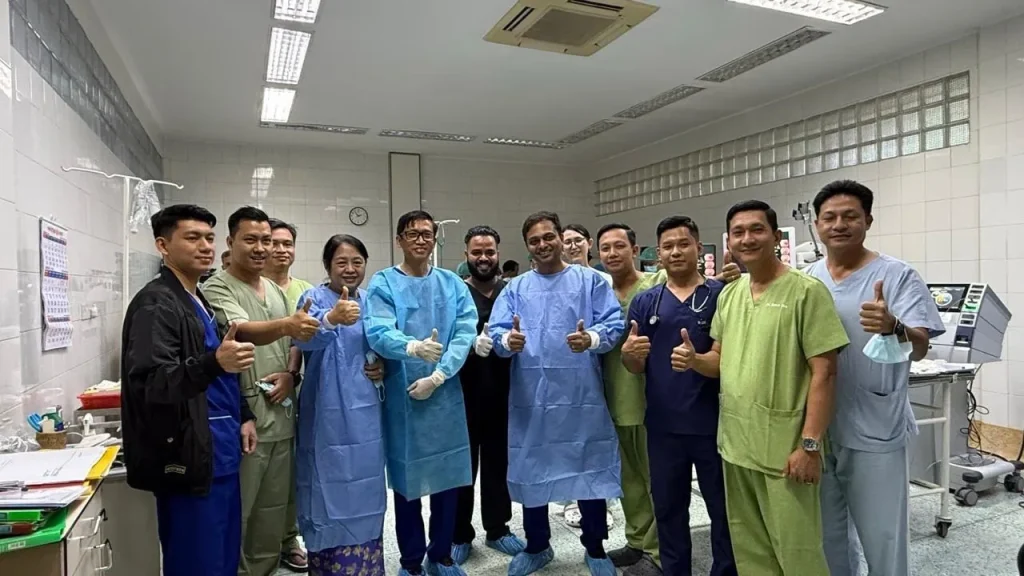
Advanced endoscopy live workshop

Overview

What is Endoscopic Ultrasound (EUS)?

Endoscopic ultrasound (EUS) uses an endoscope with a small ultrasound probe at its tip. Because the probe sits right next to the organs, it gives very detailed images of the pancreas, bile ducts, gallbladder, liver and the layers of the digestive wall.

Through the same endoscope a fine needle can take samples (EUS-FNA / FNB) from masses, lymph nodes or cysts, and fluid collections can be drained. EUS is also used to stage cancers of the oesophagus, stomach, pancreas and rectum.

Where: Hospital-based procedure, performed by Dr. Anikhindi at Apollo Hospitals. Consultation and planning at Medigest.

Advanced Endoscopy

Endoscopic ultrasound (EUS) and EUS-guided biopsy

Why endoscopic ultrasound gives clearer images

On a normal ultrasound, sound waves have to pass through the abdominal wall, fat and gas, which limits detail. In endoscopic ultrasound the probe sits inside the stomach or duodenum, just a few millimetres from the pancreas and bile duct. This closeness gives sharp images of small stones, cysts and masses, and shows the layers of the digestive wall.

Common uses of EUS

  • Pancreatic cysts and masses: characterisation and sampling of cyst fluid or tissue.
  • Small bile duct stones: detection when other scans are not conclusive.
  • Cancer staging: depth of tumours of the oesophagus, stomach, pancreas and rectum, and nearby lymph nodes.
  • Subepithelial lesions: lumps under the lining of the gut.
  • Chronic pancreatitis: assessment of the pancreas.

EUS-guided therapy

Beyond diagnosis, EUS is used for treatment: draining pancreatic fluid collections, creating bile drainage routes when ERCP is not possible, and coeliac plexus block for pain in selected patients. Dr. Shrihari Anikhindi has published research on EUS-guided procedures, including EUS-guided choledochoduodenostomy and EUS-FNA for gallbladder masses.

Endoscopic ultrasound with Dr. Shrihari Anikhindi

EUS is performed as a hospital-based procedure at Apollo Hospitals. You can begin with a consultation at Medigest, West Punjabi Bagh, where your CT or MRI reports are reviewed to decide whether EUS will help.

Safety of EUS and EUS-FNA

EUS is generally safe. Needle sampling carries small risks such as bleeding, infection or pancreatitis. The doctor will discuss these, and review blood thinners, before the procedure.

Preparing for endoscopic ultrasound

Fast for six to eight hours before the procedure. Bring CT or MRI reports and images, and a list of medicines. If a biopsy is likely, blood thinners may need to be paused, so tell the clinic in advance. Because sedation is used, come with an adult who can take you home and avoid driving for the rest of the day.

Book a consultation or request an online consultation to discuss whether Endoscopic Ultrasound (EUS) is right for you.

Before & after

Who needs it, how to prepare and recovery

General guidance - the clinic gives you personalised instructions when you book.

Why it is done

  • Pancreatic cysts, masses or chronic pancreatitis
  • Suspected bile duct stones not seen on other scans
  • Staging of GI cancers
  • Lumps under the lining of the oesophagus, stomach or rectum
  • Biopsy of masses or lymph nodes
  • Drainage of pancreatic fluid collections

How to prepare

  • Fast for 6-8 hours
  • Tell the doctor about blood thinners - some may need stopping before a biopsy
  • Bring CT/MRI reports and images
  • Come with an adult escort

After the procedure

  • Mild throat discomfort or bloating settles quickly
  • Rest for the day after sedation
  • Biopsy results usually take a few working days

On the day

What happens on the day

  1. 01

    Sedation

    You are sedated and monitored.

  2. 02

    Imaging

    The echo-endoscope gives close-up ultrasound images.

  3. 03

    Sampling

    Needle samples or drainage are done if needed.

FAQ

Common questions about Endoscopic Ultrasound (EUS)

How is EUS different from a normal ultrasound?

EUS places the ultrasound probe inside the digestive tract, close to the organs, giving much clearer images than an ultrasound done over the abdomen.

Is EUS-FNA safe?

It is a commonly performed procedure with a low risk of complications. The doctor will discuss the specific risks for your case.

Is EUS the same as a CT or MRI scan?

No. CT and MRI scan the whole abdomen from outside. EUS gives close-up images of specific organs from inside the gut and allows needle sampling, so it often answers questions that CT or MRI cannot.

How long does it take to get EUS biopsy results?

The images are discussed on the day. Results of needle samples usually take a few working days, and special tests on the sample may take longer.

Can EUS find pancreatic cancer early?

EUS can detect small pancreatic lesions and allows sampling. It is used for people with suspicious findings or a high risk, as advised by the doctor.

How do I book this test at Medigest?

Book a consultation first by phone, WhatsApp or the online form. Hospital-based procedure, performed by Dr. Anikhindi at Apollo Hospitals. Consultation and planning at Medigest. The clinic will share preparation instructions.

What is the endoscopic ultrasound price in Delhi?

The price depends on whether only images are needed or also a needle biopsy (EUS-FNA/FNB) or drainage, and on the hospital. The clinic gives an estimate after reviewing your CT or MRI reports. EUS is usually covered by health insurance when done in hospital.

Appointments

Consult a gastroenterologist about your digestive or liver symptoms

Visit the clinic in West Punjabi Bagh, or book an online consultation from home.