

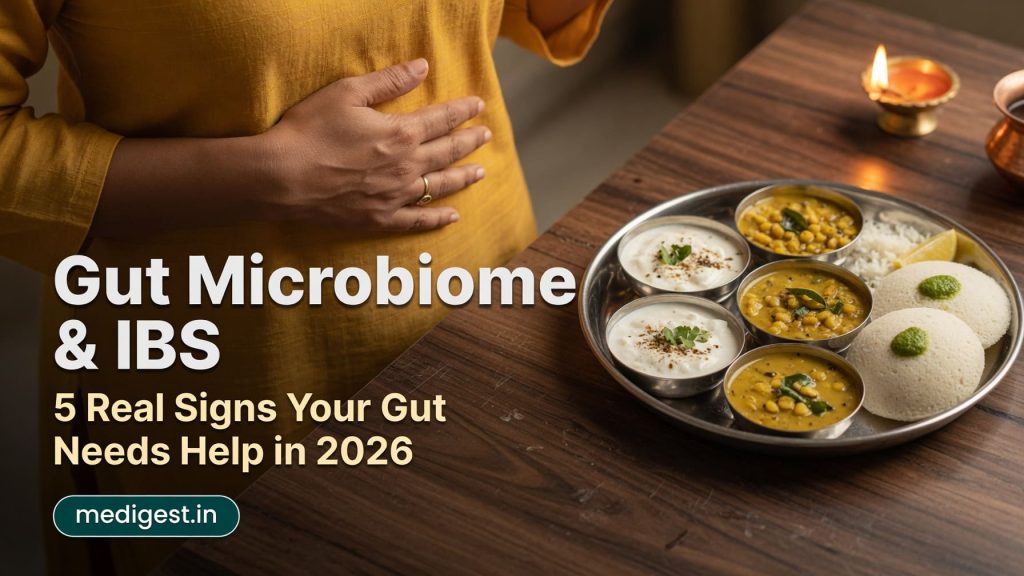
Bloating after lunch. That heavy, tight feeling that shows up whether you ate dahi-chawal or a simple dal. Irregular bowel days you’ve just started accepting as normal. If this is your everyday, you’re not alone and it’s almost certainly not in your head.
The link between gut microbiome and IBS is one of the most actively researched areas in gastroenterology right now, and what keeps coming up is this: the trillions of bacteria living in your gut are either protecting you or quietly making things worse. For a growing number of urban Indians, it’s the latter and the shift happened gradually, through choices that seemed completely unremarkable at the time.
What Exactly Is Going On in There?
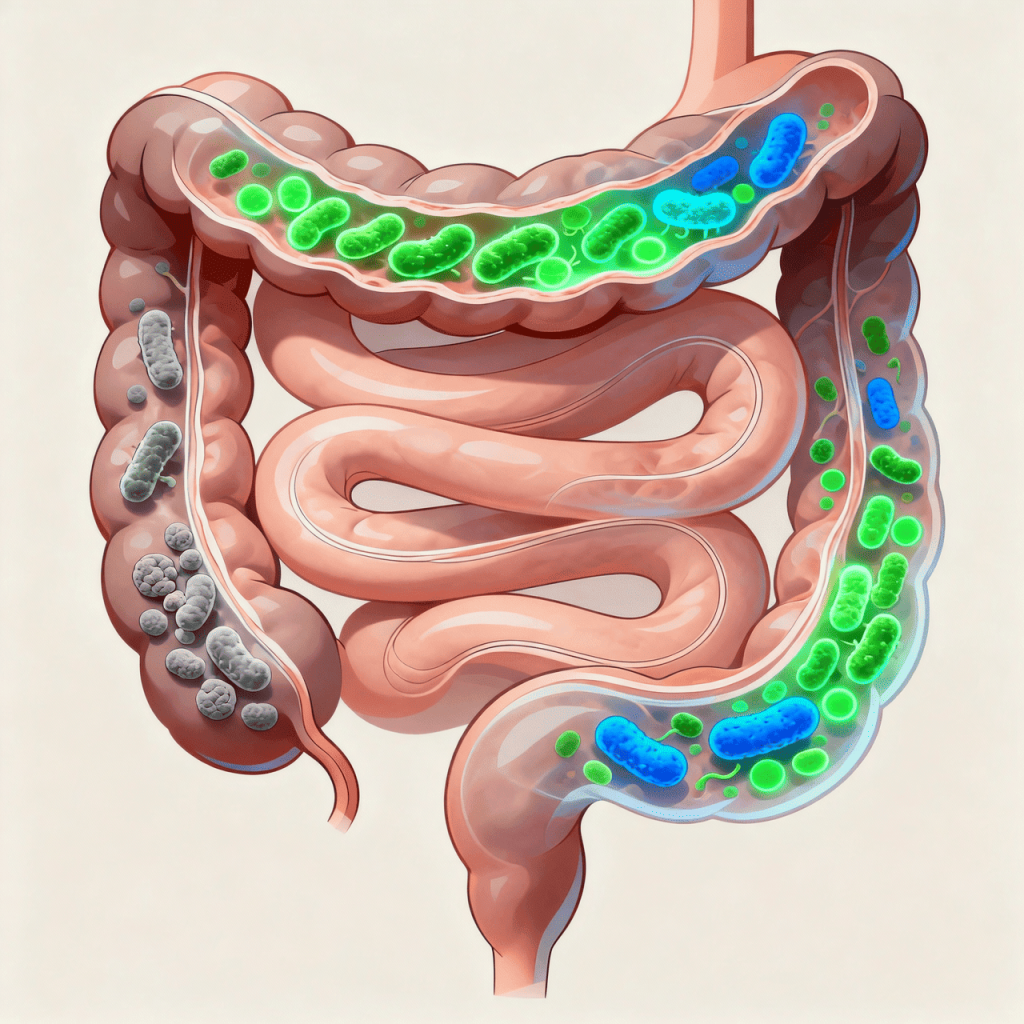
Your gut microbiome is the enormous community of bacteria, fungi, and other microorganisms living mostly in your large intestine. Over 100 trillion of them. That number is genuinely hard to process.
When this community is diverse and balanced, digestion runs smoothly, your immune system has backup, and your mood is steadier than you’d expect your gut to influence. When the balance tips researchers call this dysbiosis things go wrong in ways that don’t always look digestive. Fatigue. Skin flares. Brain fog. And, very commonly, IBS.
IBS Irritable Bowel Syndrome is a chronic condition involving abdominal pain, bloating, constipation, diarrhoea, or some rotating combination of all of them. There’s no visible structural damage when a doctor looks inside. Which is partly why it gets dismissed so often. “Your tests are fine.” Sure. But something is clearly off.
Understanding the gut microbiome and IBS together is what changes how you approach this. A 2026 study in Frontiers in Nutrition confirmed what gut researchers have been building toward for years the microbiota-diet-metabolite axis directly protects against chronic digestive conditions. What you eat determines who lives in your gut. Who lives in your gut determines how bad your IBS gets. It’s that direct.
Why Gut Microbiome and IBS Problems Are Getting Worse for Urban Indians
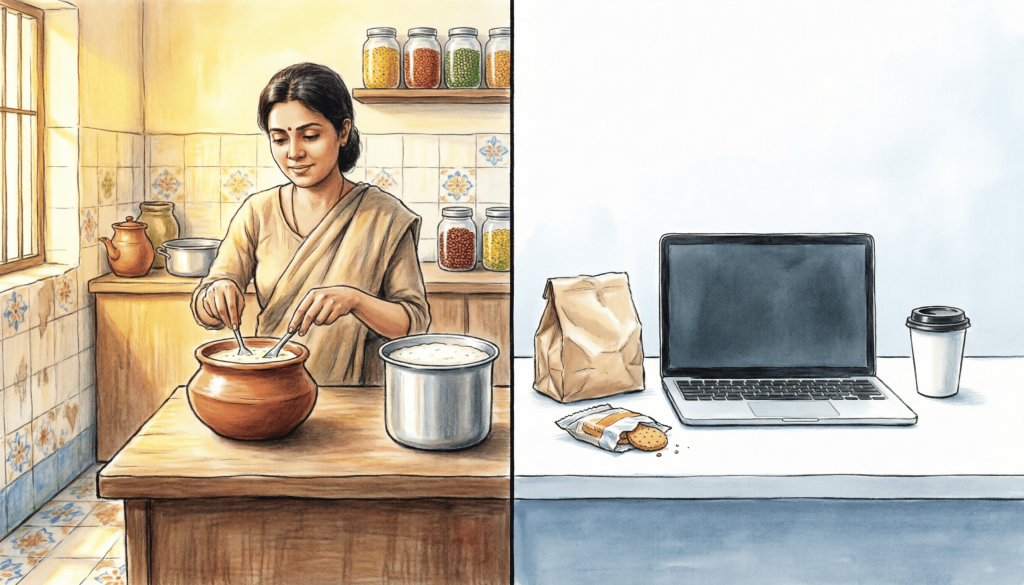
Traditional Indian cooking was already doing the right thing. Daily dahi, properly fermented idli-dosa batter, chaas after a heavy meal, whole dals with skins on, seasonal sabzi none of this was a “gut health protocol.” It was just food. But it fed the right bacteria consistently, across generations.
Research from the World Gastroenterology Organisation found that Indians in regions where fermented staples like dhokla, buttermilk, and idli remain regulars in daily meals show measurably higher gut microbial resilience than those eating more processed diets. The protective bacteria weren’t a discovery. They were already in the cuisine.
Urban life in 2026 has moved far from that. Lunch from a delivery app. Dinner at 10pm. A packet of biscuits at 4pm because there wasn’t time for anything else. Antibiotics taken twice in the last year, not always finished. Chronic background stress that everyone treats as just how life is. Each of these, individually, wouldn’t break a healthy gut. Together, over months and years, they do.
Gastroenterologists in Indian cities are now seeing gut microbiome and IBS cases in patients in their early twenties. That wasn’t a common story a decade ago.
5 Real Signs Your Gut Microbiome and IBS Are Connected
These patterns show up when dysbiosis and IBS are running together:
Bloating that arrives fast within 20 to 30 minutes of eating, especially after dal, rajma, or anything wheat-heavy. This usually means fermentation is happening in the wrong part of the gut, not the large intestine where it belongs.
Bowel pattern that changes week to week constipation one week, loose stools the next, no obvious dietary reason. Classic IBS-M pattern, and the microbiome is almost always involved.
Fatigue and fog after meals around 90% of your body’s serotonin gets made in the gut. When the microbiome is off, that production suffers. Which is why some people with gut microbiome and IBS issues describe feeling mentally slow after eating, not just physically uncomfortable.
Skin breaking out around the chin and jaw the gut-skin axis is real. Dysbiosis often shows up on the face before someone consciously notices their digestion has changed.
Symptoms that spike during stressful weeks if your IBS flares reliably during exams, difficult work periods, or family stress, that’s the gut-brain axis in action. Cortisol directly alters gut motility and shifts microbial balance. Your gut is not ignoring your stress. It’s responding to it in real time.
What Actually Helps Using What’s Already in Your Kitchen
The best approach to gut microbiome and IBS management doesn’t require exotic imports or complicated supplement stacks. The fundamentals are already in Indian food.
Dahi, Daily, Without Skipping
Plain dahi. Homemade or full-fat unflavoured from a good dairy. Not the flavoured kind with sugar added, which carries very little your gut can use. One small bowl with lunch not on an empty stomach introduces Lactobacillus consistently. That consistency is what matters. One bowl a week does almost nothing. One bowl every day for a month does quite a lot.
Whole Dals, Not the Split and Skinned Kind
The skin on masoor, moong, rajma, and chhole is where the prebiotic fibre sits. Prebiotics are what good gut bacteria eat — they ferment this fibre into compounds like butyrate, which repair and protect your gut lining. A daily whole dal habit, done consistently, outperforms most probiotic supplements in this specific job. It’s not glamorous. It works.
One Fermented Food Per Meal, Properly Made
Idli and dosa from properly fermented overnight batter. Chaas after a heavy lunch. Kanji in winter. A spoonful of homemade achaar. Each one carries live bacteria and lactic acid that the gut lining needs. The “properly made” part matters instant mixes and store batter that skip fermentation time don’t carry the same benefit. The fermentation is the entire point.
Cut Back on Maida for a Few Weeks
Not forever. But for someone managing gut microbiome and IBS together, maida provides almost nothing for good bacteria while efficiently feeding the harmful ones. Switching to atta roti, snacking on makhana or roasted chana instead of biscuits for even 3 to 4 weeks, creates a noticeable shift. Not because maida is dangerous because your gut bacteria respond fast when the fibre supply changes.
Sleep and Stress Are Not Optional
Cortisol directly alters how fast food moves through your gut, increases intestinal permeability, and pushes your microbiome toward imbalance. Poor sleep compounds all of it. For anyone dealing with gut microbiome and IBS issues, managing stress is as important as anything you eat. Maybe more.
Mistakes That Keep IBS Stuck
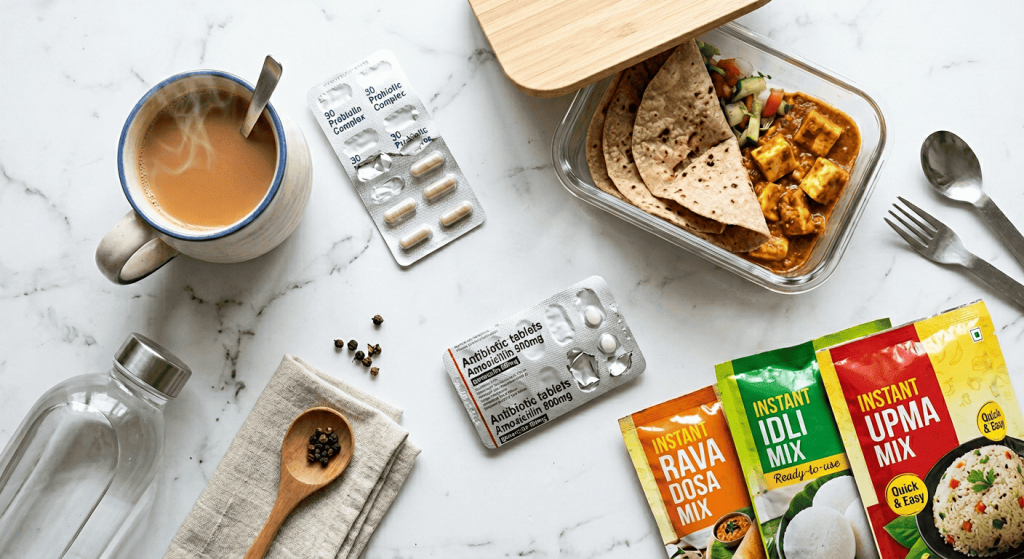
Taking probiotics with hot chai or coffee kills live cultures before they reach the gut. Room-temperature water, after a cooled meal that’s the window.
Eating fast bypasses the first stage of digestion. Saliva contains amylase that starts breaking down carbohydrates immediately. When you inhale your lunch at your desk, larger unprocessed particles hit a gut that’s already struggling. The bloating that follows isn’t random.
Depending entirely on supplements without changing the diet puts bacteria in your gut with no food source. A probiotic capsule without prebiotic fibre from food doesn’t last long. The supplement can help, but the diet has to give it something to work with.
And skipping a proper diagnosis self-labelling gut microbiome and IBS problems without seeing a gastroenterologist means potentially missing SIBO, lactose intolerance, coeliac disease, or early inflammatory bowel disease, all of which look like IBS and need completely different management. If symptoms have lasted more than three months, or there’s blood in the stool, unexplained weight loss, or fever that’s a doctor visit, not a diet change.
Frequently Asked Questions
Can fixing the gut microbiome actually reduce IBS symptoms?
Can fixing the gut microbiome actually reduce IBS symptoms?
For mild to moderate IBS, yes dietary changes that support gut microbiome and IBS recovery lead to real, measurable improvement for a lot of people. Adding fermented foods, prebiotic fibre, and managing stress consistently gives the microbiome what it needs to shift. Severe symptoms, or anything involving blood in stool or significant weight loss, need a gastroenterologist’s evaluation first.
How long before you notice a difference?
Gut bacterial composition starts shifting within 2 to 4 weeks of consistent dietary changes. Actual IBS symptom improvement typically shows up between 4 to 8 weeks. Rebuilding genuine microbial diversity after prolonged dysbiosis takes longer 3 to 6 months is a realistic window. Consistency matters far more than perfection in any single week.
Is dahi actually enough, or do you need supplements?
For most people without a diagnosed condition, daily plain dahi is a legitimate and research-backed starting point. Supplements make more sense in specific situations: post-antibiotic recovery, diagnosed SIBO, or where a doctor recommends a particular strain. For general gut microbiome and IBS management, consistent dahi beats inconsistent supplementation every time.
Why does IBS always get worse when life gets stressful?
Because the gut-brain axis runs both ways. When stress hits, cortisol alters gut motility, increases intestinal permeability, and shifts the microbiome toward imbalance. This is a real physiological pathway. Managing stress for gut microbiome and IBS is not a soft suggestion it’s one of the most concrete things you can actually do.
If your gut symptoms have been going on for more than a few weeks, it’s worth a proper evaluation rather than managing it alone. Visit medigest.in to connect with a gastroenterology specialist