

Your gut does a lot more than digest lunch. It regulates your immune system, affects your mood, influences your skin, and even plays a role in how well you sleep. When it’s off — really off — you feel it everywhere. Bloating, fatigue, brain fog, breakouts, irregular bowel movements. The whole package.
The good news: there are simple, proven ways to improve gut health naturally — no expensive supplement stack, no 30-day detox required. Most of what your gut actually needs costs nothing or very little. The problem is most people looking to improve gut health naturally are searching in the wrong place — probiotic pills, fancy powders, detox teas — when the answer is mostly just food and habits.
Here’s what the research says, translated for real Indian life.
What “Gut Health” Actually Means
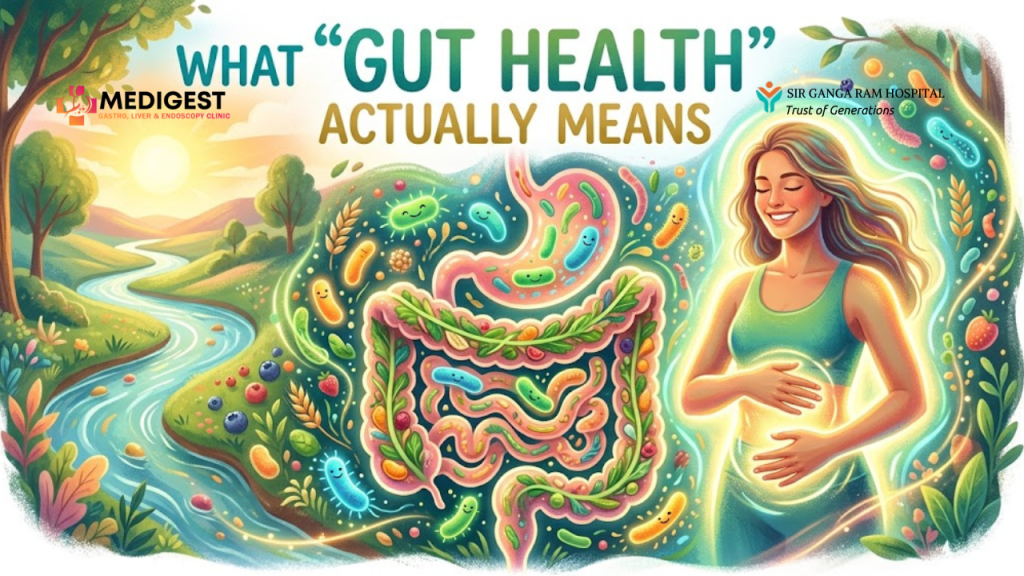
Your gut is home to roughly 100 trillion microorganisms — bacteria, fungi, viruses — collectively called the gut microbiome. This isn’t a passive colony. These microbes produce vitamins, regulate inflammation, train your immune system, and communicate directly with your brain through the gut-brain axis.
When the balance between beneficial and harmful bacteria shifts — a state called dysbiosis — things go sideways. And dysbiosis doesn’t always feel like a stomach issue. It can show up as low energy, mood dips, or skin that won’t behave, which is exactly why the connection between gut health and acne is getting so much attention from gastroenterologists right now.
The goal isn’t a “perfect” gut — that’s not really a thing. The goal is diversity and resilience.
7 Ways to Improve Gut Health Naturally
Every tip below is something you can start today. Some are dietary, some are lifestyle. All of them are backed by research. And none of them require you to overhaul your entire life overnight. Small, consistent changes are genuinely how you improve gut health naturally — not 10-day juice cleanses.
1. Eat More Fiber — but Make It Real Fiber
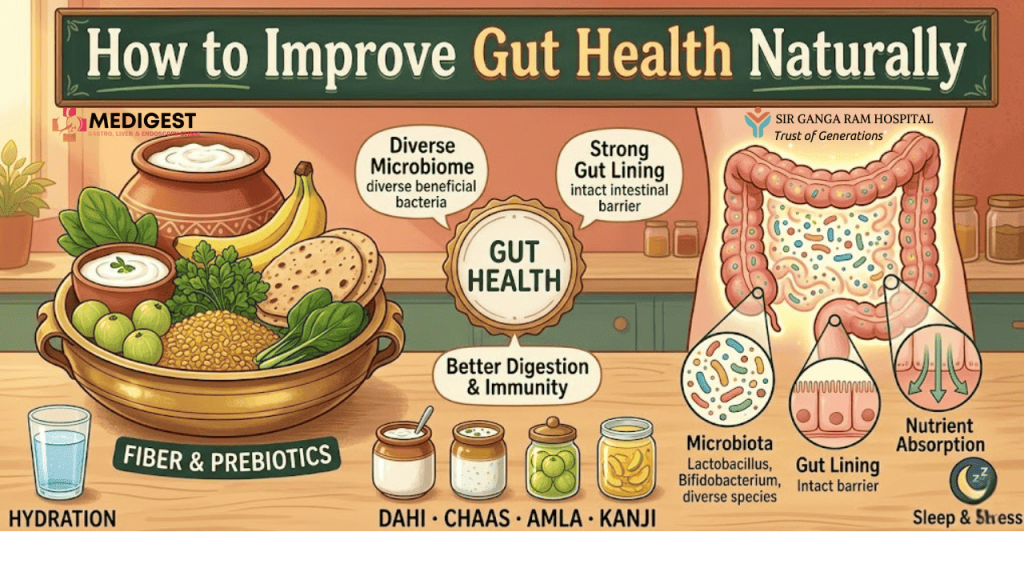
Eating whole-food fiber is one of the most reliable ways to improve gut health naturally. Not the powder you stir into water — real fiber from dal, sabzi, whole grains, and fruits. Your gut bacteria ferment this fiber and produce short-chain fatty acids, compounds that reduce inflammation and protect the gut lining.
Most Indians eat far less fiber than the recommended 25–38g per day. Maida-heavy meals, white rice, and packaged snacks have largely replaced the whole foods that traditionally fed the microbiome. Switching even one meal — say, replacing refined bread with a roti made from atta — makes a real difference over time.
2. Add Fermented Foods Daily
Dahi is genuinely underrated as a gut health food. So is chaas, kanji (the fermented carrot drink from North India during winters), and homemade pickles made with salt rather than vinegar.
A 2025 review published in PMC confirmed that fermented foods introduce beneficial live microbes and bioactive metabolites into the gut, improving microbial diversity, reducing inflammation, and supporting immune function. The Stanford FeFiFo study also found that participants who increased fermented food intake showed measurable increases in gut bacteria diversity along with a drop in inflammatory markers.
One small bowl of dahi a day is a genuinely good habit. Not the sweetened packaged kind — plain, preferably homemade or fresh from a dairy.
3. Cut Back on Ultra-Processed Foods
This one is difficult to hear because ultra-processed foods are everywhere now — biscuits, instant noodles, packaged namkeen, flavoured yogurts, fruit juices with zero actual fruit in them.
These foods are typically high in emulsifiers, artificial sweeteners, and refined sugars — all of which studies have linked to gut dysbiosis. Artificial sweeteners in particular may disrupt the gut microbiome even at small doses, though research here is still developing.
You don’t have to be extreme about it. But being aware of what’s actually in what you’re eating is a start.
4. Manage Stress — Your Gut Literally Feels It
The gut-brain axis is a two-way communication channel. Stress triggers real, measurable changes in the gut: altered motility, increased intestinal permeability (sometimes called “leaky gut”), and shifts in bacterial populations. People with high chronic stress often develop IBS or experience flare-ups of existing digestive conditions.
Yoga, even 20 minutes a day, genuinely helps. So does not eating while staring at your phone — distracted eating affects digestion more than most people realise.
5. Sleep Better
Sleep is one of the most overlooked ways to improve gut health naturally. Your gut has its own circadian rhythm. When your sleep is fragmented or chronically short, gut bacteria get disrupted too.
Your gut has its own circadian rhythm. When your sleep is fragmented or chronically short, gut bacteria get disrupted too. A 2025 clinical trial noted measurable improvements in gut diversity when participants maintained consistent sleep schedules alongside dietary changes.
Seven to eight hours of sleep on a relatively consistent schedule — not just on weekends — is the target. If you’re consistently tired after meals, that’s worth looking into separately; there’s more going on with post-meal fatigue than most people realise.
6. Drink Enough Water
Simple, boring, non-negotiable. Water keeps things moving through the intestine, helps break down food, and keeps the gut lining hydrated. Constipation — one of the most common gut complaints — is often just chronic mild dehydration.
Aim for about 8–10 glasses a day. Herbal teas count. Coconut water counts. Chaas counts. Coffee in excessive amounts does the opposite.
7. Move Your Body
Exercise increases the diversity of your gut microbiome — this is one of the most consistent findings across gut health research. Even 30 minutes of walking a day improves bowel regularity and reduces bloating. You don’t need a gym membership.
The mechanism isn’t fully understood yet, but the association is clear: sedentary people tend to have less diverse microbiomes than active ones.
The Foods Your Gut Loves (and a Few It Doesn’t)
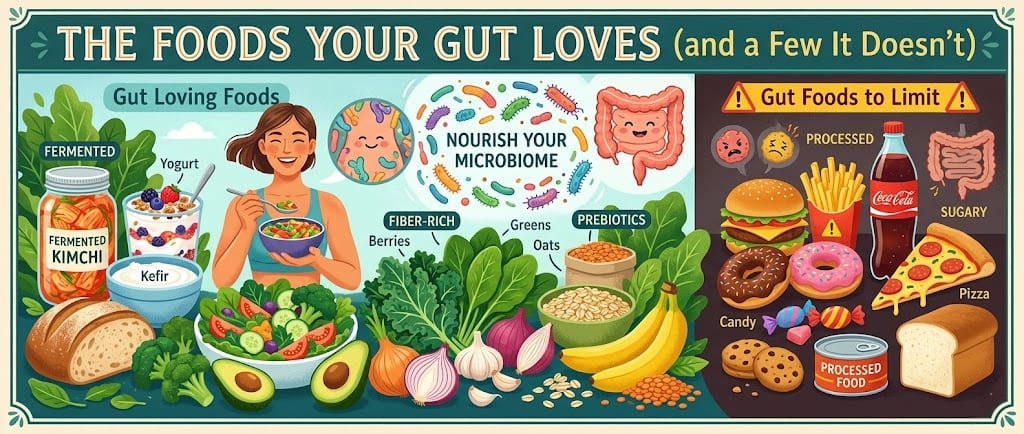
Gut-friendly Indian foods:
- Dahi and chaas (natural probiotics)
- Moong dal and masoor dal (prebiotic fiber)
- Amla — one of the richest natural sources of Vitamin C and has antioxidant properties that support gut lining health
- Methi (fenugreek) — good source of soluble fiber
- Bananas (ripe) — gentle on the gut, feed good bacteria
- Oats and jowar — whole grain fiber without the heaviness of wheat for some people
What quietly harms your gut:
- Antibiotic overuse (kills beneficial bacteria along with the bad)
- Excessive alcohol
- Constant snacking — the gut needs breaks between meals to clean itself (this process is called the migrating motor complex)
- High-fat, low-fiber diets consistently
Common Mistakes That Quietly Wreck Your Gut
If you’re trying to improve gut health naturally, there are a few habits that quietly cancel out all your good work — and most people don’t realise they’re doing them.
Reaching for a probiotic supplement before changing your diet is one of the most common mistakes. Supplements can help in specific situations, but you can’t probiotic your way out of a diet full of ultra-processed food and no fiber. The bacteria need something to feed on.
Eating while stressed or rushing through meals is another one. Digestion actually begins in the mouth — chewing properly matters. Eating fast, eating while anxious, or eating massive portions in one sitting all affect how well your gut handles the meal.
And ignoring persistent symptoms. Occasional bloating is normal. Bloating every single day, chronic constipation, constant acid reflux, or blood in the stool — these are not things to manage at home with coconut water. That’s a conversation for a gastroenterologist.
Q: How long does it take to improve gut health naturally?
A: There’s no fixed timeline, but meaningful shifts in gut bacteria composition can happen within two to four weeks of consistent dietary changes. Sustained improvement — where the microbiome becomes genuinely more resilient — takes longer, usually three to six months of regular habits. The gut responds relatively quickly to what you feed it.
Q: Is dahi as good as a probiotic supplement for gut health?
A: For most healthy people, yes — fresh dahi contains live Lactobacillus cultures and is a perfectly effective source of probiotics. It also comes with protein and calcium. Supplements are useful in specific clinical contexts (after antibiotic treatment, for example, or for diagnosed conditions), but dahi as a daily habit is evidence-backed and far cheaper.
Q: Can stress actually cause gut problems?
A: Yes, and this is very well established. The gut-brain axis means that psychological stress has direct physiological effects on the gut — including altered motility, increased gut permeability, and changes in bacterial populations. Many people with IBS find their symptoms worsen during stressful periods, and the reverse is also true: improving gut health can reduce anxiety symptoms.
Q: What’s the single most effective change for gut health?
A: Honestly, adding more dietary fiber from whole foods — consistently, over time — is the most evidence-backed single change you can make. The research on fermented food and fiber from Stanford’s FeFiFo study consistently shows fiber intake as the strongest predictor of microbiome diversity and gut health outcomes.
If your gut symptoms have been persistent for more than a few weeks — or if you’re not sure what’s going on — it’s worth getting checked rather than self-managing indefinitely. Good habits help, but they’re not a substitute for a proper diagnosis when something is wrong.