

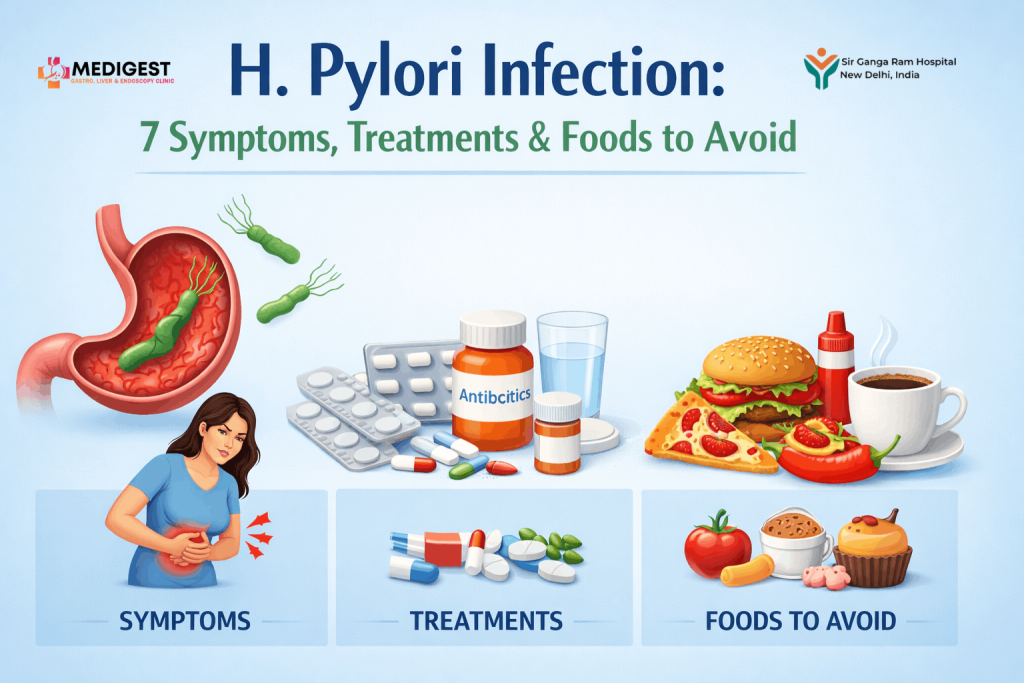
H.pylori infection could be the reason, and most people have no idea that they are suffering from this condition. H. pylori is one of the most common infections across the globe. In India, studies have shown that over 60% of people are suffering from this condition. However, this condition goes undetected for most people. In this post, we will be discussing the symptoms, detection, treatment, and what foods to have when suffering from this condition.
What Is H. Pylori?
Helicobacter pylori (H.pylori), a spiral-shaped bacteria, infects the stomach lining, but it is unusual among bacteria as it can thrive in the very acidic environment of the stomach by producing a special enzyme called urease, which counteracts the acidity of the stomach.
It can be spread by infected food, water, or by coming into close contact with infected people, which is why it is more common in crowded places.
It can infect a person for many years without causing any symptoms, which is why it is difficult to detect.
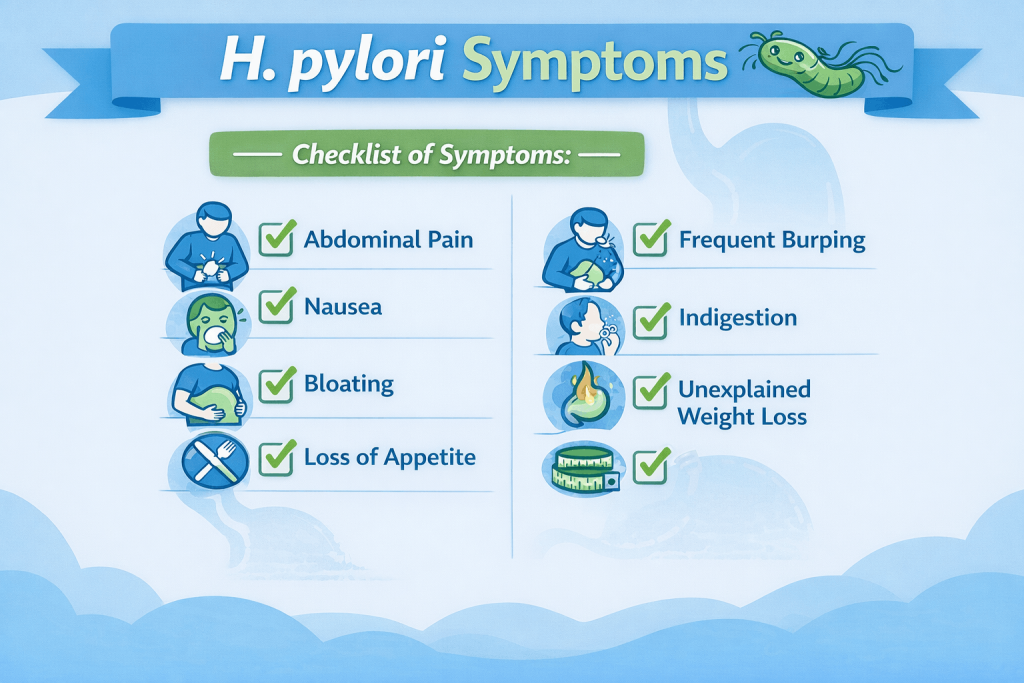
7 Common Symptoms of H. Pylori Infection
Not everyone with H. pylori infection feels unwell, but when symptoms do appear, here’s what to look out for:
- Burning or Gnawing Stomach Pain
This is the most classic sign. The pain typically shows up when your stomach is empty between meals or late at night and may ease temporarily after eating or taking an antacid. Over time, this discomfort can become persistent and harder to ignore.
- Frequent Nausea
Many people with H. pylori feel nauseous, especially in the morning or shortly after meals. This isn’t the kind of nausea that leads to vomiting each time it’s more of a persistent, low-grade queasiness that lingers throughout the day.
- Bloating and Excessive Burping
H. pylori disrupts normal stomach acid production, which can lead to gas build-up, a feeling of fullness, and frequent burping even after small meals. If you find yourself constantly bloated without an obvious dietary reason, this infection could be the culprit.
- Loss of Appetite
When your stomach is constantly uncomfortable, eating stops feeling enjoyable. People with H.pylori infection often notice a gradual loss of appetite that can last for weeks. If meals feel like a chore or you’re regularly skipping food without reason, it’s worth investigating.
- Unexplained Weight Loss
Losing weight without trying to especially alongside digestive symptoms is a red flag. This can happen when poor appetite and stomach discomfort lead to consistently eating less. Unexplained weight loss should always be investigated promptly by a doctor.
- Dark or Tarry Stools
If left untreated, H. pylori can cause stomach ulcers that bleed. Dark, tarry, or black stools are a warning sign of internal bleeding in the digestive tract. This is a symptom that requires urgent medical attention do not wait.
Persistent acidity or acid reflux that doesn’t fully respond to antacids may not actually be GERD it could be H.pylori infection. The infection alters the stomach’s acid balance, which can trigger reflux-like symptoms. If your acidity keeps coming back despite treatment, ask your doctor about testing for H.pylori infection.
How Is H. Pylori Diagnosed?
There are several ways to test for H.pylori, and your doctor will recommend the most suitable one based on your symptoms:
- Urea Breath Test: A simple, non-invasive test where you drink a special liquid and breathe into a bag. The results are quick and highly accurate.
- Stool Antigen Test: A straightforward lab test that checks for traces of H. pylori in your stool. Widely available and reliable.
- Blood Antibody Test: Detects whether your body has produced antibodies against H. pylori. This can indicate a past or current infection.
- Endoscopy with Biopsy: The gold standard when ulcers or more serious issues are suspected. A thin camera is passed into the stomach and a small tissue sample is taken for testing. At Medigest Clinic, we offer all these diagnostic options, including endoscopy, so you get an accurate answer quickly.
H.Pylori Treatment: What to Expect
The good news is that H.pylori is very treatable. Most people are cured after a standard course of medication:
- Triple Therapy (14 days): The most common first-line treatment. It combines two antibiotics and one proton pump inhibitor (PPI) taken together for two weeks. Completing the full course is essential stopping early allows the bacteria to become antibiotic-resistant.
- Bismuth Quadruple Therapy: Used when standard treatment hasn’t worked or resistance is suspected. This combines four medications and is highly effective for resistant strains.
- Follow-Up Test: Four weeks after finishing treatment, a follow-up breath or stool test confirms whether the infection has been cleared. Don’t skip this step.
- Lifestyle Support: Alongside medication, reducing stress, avoiding irritants like alcohol and spicy food, and eating a gut-friendly diet all help speed up recovery.
The good news is that H. pylori is very treatable. Most people are cured after a standard course of medication:
- Triple Therapy (14 days): The most common first-line treatment. It combines two antibiotics and one proton pump inhibitor (PPI) taken together for two weeks. Completing the full course is essential — stopping early allows the bacteria to become antibiotic-resistant.
- Bismuth Quadruple Therapy: Used when standard treatment hasn’t worked or resistance is suspected. This combines four medications and is highly effective for resistant strains.
- Follow-Up Test: Four weeks after finishing treatment, a follow-up breath or stool test confirms whether the infection has been cleared. Don’t skip this step.
- Lifestyle Support: Alongside medication, reducing stress, avoiding irritants like alcohol and spicy food, and eating a gut-friendly diet all help speed up recovery.
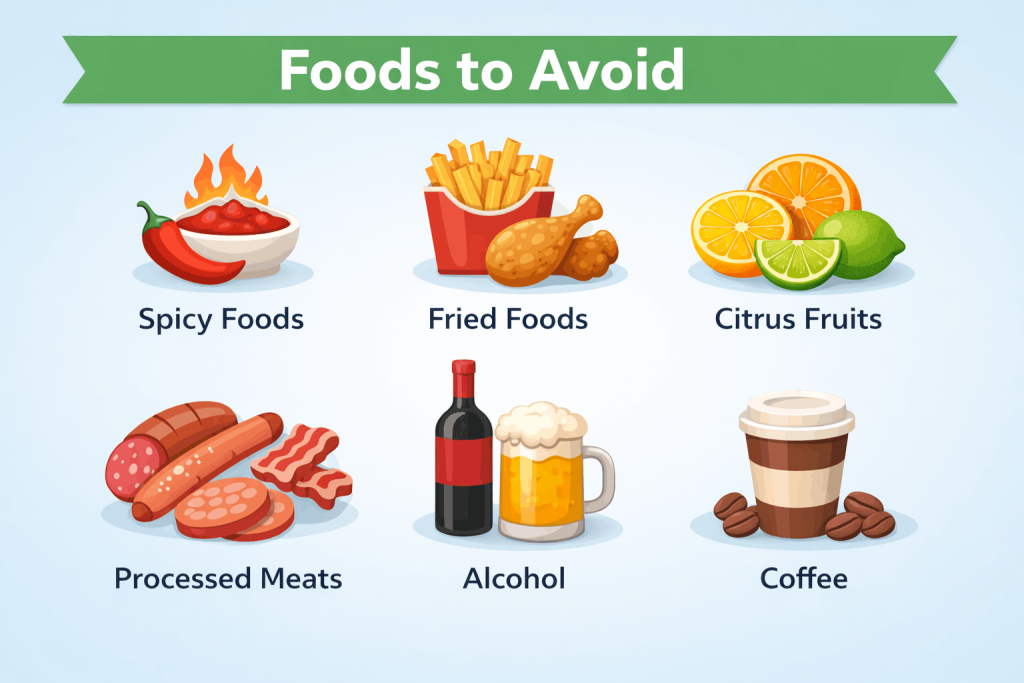
Foods to Avoid with H.Pylori
What you eat during treatment can make a real difference to how quickly you heal. These foods are best avoided:
- Spicy foods: Irritate the already-inflamed stomach lining and can worsen pain.
- Alcohol: Damages the stomach’s protective mucosa and also interferes with antibiotics, reducing their effectiveness.
- Tea and coffee: Caffeinated drinks stimulate excess acid production, making symptoms worse.
- Carbonated drinks: Fizzy drinks increase bloating and add to gastric discomfort.
- Processed and fried foods: These are hard to digest and slow down the healing of the stomach lining.
- Acidic foods (citrus, tomatoes): Foods high in acid like oranges, lemons, and tomato-based dishes can worsen the burning sensation and nausea.
Foods That Help During H.Pylori Recovery
Just as important as what to avoid is knowing what to eat. These foods support healing and are especially easy to find in Indian households:
- Curd and buttermilk (chaas): Rich in probiotics, these restore healthy gut bacteria that antibiotics can disrupt. Curd rice is a particularly gentle, gut-friendly meal during treatment.
- Broccoli and green vegetables: Broccoli contains sulforaphane, a compound that has been shown in studies to actively inhibit H.pylori.
- Honey: Raw honey has natural antibacterial properties that can complement treatment.
- Ginger: Reduces nausea and has anti-inflammatory benefits. Try ginger water or ginger tea (without caffeine) as a replacement for your regular chai.
- High-fibre foods: Whole grains, lentils (dal), and legumes support healthy digestion and help the gut lining recover.
Tip: Try replacing your morning chai with cumin water (jeera pani) or ginger water during your course of treatment. Your stomach will thank you.
When Should You See a Gastroenterologist?
See a specialist if you experience any of the following:
- Stomach pain lasting more than 2 weeks that isn’t improving with antacids
- Blood in your stool or vomit
- Unexplained weight loss alongside digestive symptoms
- Symptoms returning after a previous H. pylori treatment
- Severe nausea that is preventing you from eating normally
Final Thoughts
H. pylori is incredibly common, often silent, and most importantly very treatable when caught early. The danger lies in ignoring symptoms for too long. Left untreated, H. pylori can lead to chronic gastritis, stomach ulcers, and in rare cases, has been linked to stomach cancer.
If you’ve been experiencing persistent stomach pain, nausea, or acidity, don’t wait for it to go away on its own. Our gastroenterologists at Medigest Clinic can test and treat H. pylori quickly and effectively. Book a consultation today.
Frequently Asked Questions
Q: Can H. pylori go away on its own?
A: No, H.pylori almost never clears without antibiotic treatment. The bacteria is well-adapted to surviving in the stomach, and ignoring it only gives it time to cause more damage, including ulcers and chronic gastritis.
Q: Is H. pylori contagious?
A: Yes, it spreads through contaminated food, water, and close contact with an infected person. It’s particularly common in areas with crowded living conditions or where hand hygiene may be a challenge.
Q: How long does H. pylori treatment take?
A: The standard triple therapy course takes 14 days. After completing the full course, a follow-up test is done 4 weeks later to confirm the infection has been cleared.
Q: What happens if H. pylori is left untreated?
A: Untreated H.pylori can cause chronic gastritis, stomach ulcers, and in rare cases is linked to stomach cancer. It’s important to get tested and treated as soon as symptoms arise.
Q: Can I eat curd during H. pylori treatment?
A: Yes, probiotic foods like curd and buttermilk are actually beneficial during treatment. They help restore healthy gut bacteria that antibiotics can disrupt, and are gentle on the stomach.