

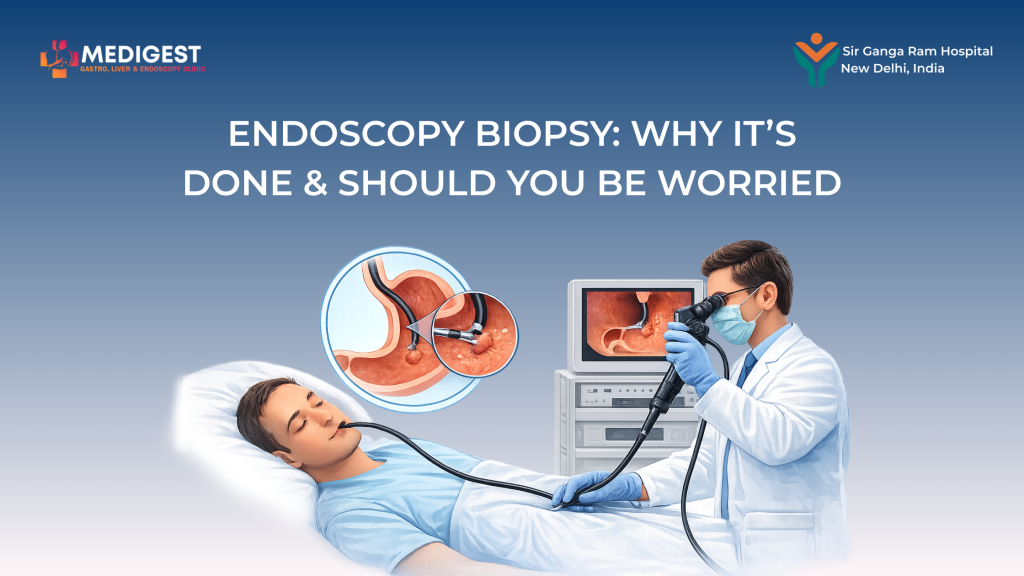
If your physician has recommended an endoscopy biopsy, you are bound to feel nervous. Patients always wonder, “Does this mean cancer?”
The reality is that in most instances, a biopsy performed during an endoscopy is carried out to verify the presence of minor ailments and to ensure the right diagnosis is made, and not because something serious has been confirmed.
What Is an Endoscopy Biopsy?
An endoscopy biopsy is a tiny piece of tissue that is removed from the lining of the stomach, esophagus, or intestine during an endoscopy procedure
The tissue is then analyzed in a laboratory to look for:
- Inflammation
- Infection (such as H. pylori)
- Ulcers
- Polyps
- Precancerous changes
- Cancer (rare instances)
The biopsy takes only a few minutes to perform and does not require any further surgery.
Why Is a Biopsy Done During Endoscopy?
Doctors recommend this for the following reasons:
- To verify the reason for chronic acidity
- To check for H. pylori infection
- To assess stomach ulcers
- To investigate unexplained weight loss
- To examine abnormal growth or polyps
- To rule out serious diseases
In most instances, the stomach lining may appear normal; however, inflammation can only be definitively identified through a biopsy.
Does Biopsy During Endoscopy Mean Cancer?
This is one of the most frequent fears patients experience when they hear the word biopsy. Many patients immediately assume it means cancer is likely suspected. However, this is not usually the case.
During an endoscopy, biopsies are usually taken to exclude serious diseases, not to confirm them. Biopsies are usually taken by doctors to determine:
- Gastritis (inflammation of the stomach lining)
- H. pylori infection
- Celiac disease
- Benign (non-cancerous) polyps
- Mild tissue changes that require clarification
In fact, these benign diseases are much more prevalent than cancer.
A biopsy is simply a procedure where a small tissue sample is taken for microscopic analysis. Many digestive problems may appear similar during an endoscopy, and a biopsy is used to determine a clear and accurate diagnosis. It eliminates any doubts and ensures the correct treatment is administered.
Most importantly, if there are any abnormal changes, a biopsy can significantly improve safety, treatment efficacy, and long-term results. Early detection enables doctors to treat problems before they become serious.
Therefore, instead of being a cause for concern, a biopsy is actually a preventive and protective measure in contemporary digestive medicine.
Is Endoscopy Biopsy Painful?
No, it is not painful. Patients are typically sedated to help them relax and feel comfortable throughout the procedure. Most patients will not remember the procedure after it is completed.
Another reason why it is not painful is that the lining of the digestive tract does not have nerve endings, as the skin does. Therefore, when a small tissue sample is collected during a biopsy, you will not feel any pain or cutting sensation.
Some mild symptoms may be experienced after the procedure. These symptoms are usually temporary and resolve on their own. Some of these symptoms include:
A mild sore throat
Bloating due to air used during the procedure
These symptoms should resolve on their own within a few hours. Serious complications are rare, and endoscopy with biopsy is a safe procedure.
How Biopsy Is Taken During Endoscopy (Procedure Overview)
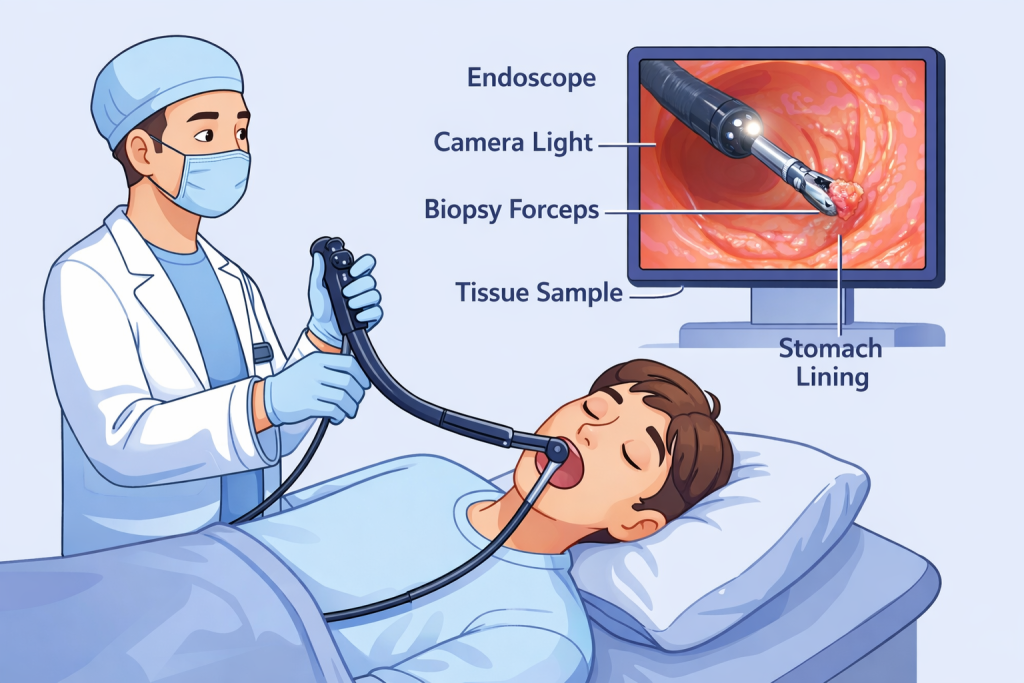
During the procedure, a thin, flexible tube with a tiny camera called an endoscope is gently passed through the mouth into the stomach and upper intestine. If the doctor notices any area that needs closer examination, a very small instrument is passed through the scope to collect a tiny tissue sample.
The process:
- Takes only a few seconds
- Is painless because the patient is sedated
- Usually does not cause bleeding
- Does not require stitches or cuts
- The patient can go home the same day
This technique is widely used and considered one of the safest diagnostic tools in gastroenterology.
Should You Be Worried About It?
In most instances, there is no need to worry.
A biopsy does not necessarily mean that something serious is happening. Biopsies are often conducted to rule out serious conditions and diagnose common and treatable conditions such as gastritis, infections, and inflammation. Most biopsy results are usually normal or show mild conditions that can be easily treated with medication and changes in lifestyle.
The process is also very safe when conducted by an experienced gastroenterologist. There is little chance of serious complications. Some patients may experience mild throat irritation, mild bloating, or soreness following the procedure, which usually resolves on its own within a few hours.
The biopsy results usually take 3 to 7 days. After the results are ready, your doctor will interpret the results and provide treatment if necessary. Early diagnosis by biopsy often prevents complications and ensures good long-term digestive health.
You should contact your doctor if you experience any unusual symptoms, such as severe abdominal pain, vomiting blood, black stools, or fever, following the procedure, which are rare.
When to Consult a Gastroenterologist
If you experience persistent digestive symptoms, it is important not to ignore them. Occasional acidity or stomach discomfort can be common, but when symptoms become frequent, severe, or long-lasting, they may indicate an underlying condition that needs proper medical evaluation.
You should consider consulting a gastroenterologist if you notice:
- Ongoing or worsening acidity and heartburn
- Difficulty or pain while swallowing
- Unexplained weight loss
- Persistent stomach or abdominal pain
- Blood in the stool or black, tarry stools
- Chronic nausea or vomiting
- Changes in bowel habits that last for several weeks
These symptoms do not always indicate a serious condition, but they should never be overlooked. Early assessment helps detect problems such as gastritis, ulcers, infections, inflammatory bowel disease, or polyps before they become complicated.
An endoscopy may be advised to examine the digestive tract in detail. If required, a biopsy can be performed during the procedure to confirm the diagnosis. Early detection significantly reduces the risk of complications and ensures timely treatment.
For expert evaluation and advanced endoscopy care, you can consult specialists at Medigest Clinic. Timely diagnosis and professional guidance help protect your digestive health and provide lasting peace of mind.