

Introduction
Many people experience occasional heartburn or acid reflux after eating spicy or heavy meals. While these symptoms may seem harmless at first, persistent acid reflux over a long period can lead to serious changes in the esophagus. One of the most important conditions associated with long-term reflux is Barrett’s Esophagus.
This condition occurs when the normal lining of the esophagus begins to change due to repeated exposure to stomach acid. Although it may not cause obvious symptoms on its own, it is considered medically significant because it can increase the risk of developing Esophageal Cancer in some individuals.
Understanding how this condition develops, how it is diagnosed, and how it can be managed is important for protecting long-term digestive health. In this article, we explore 10 important facts everyone should know about this reflux-related esophageal condition, including its causes, symptoms, diagnosis, treatment options, and prevention strategies.
What is Barrett’s Esophagus?
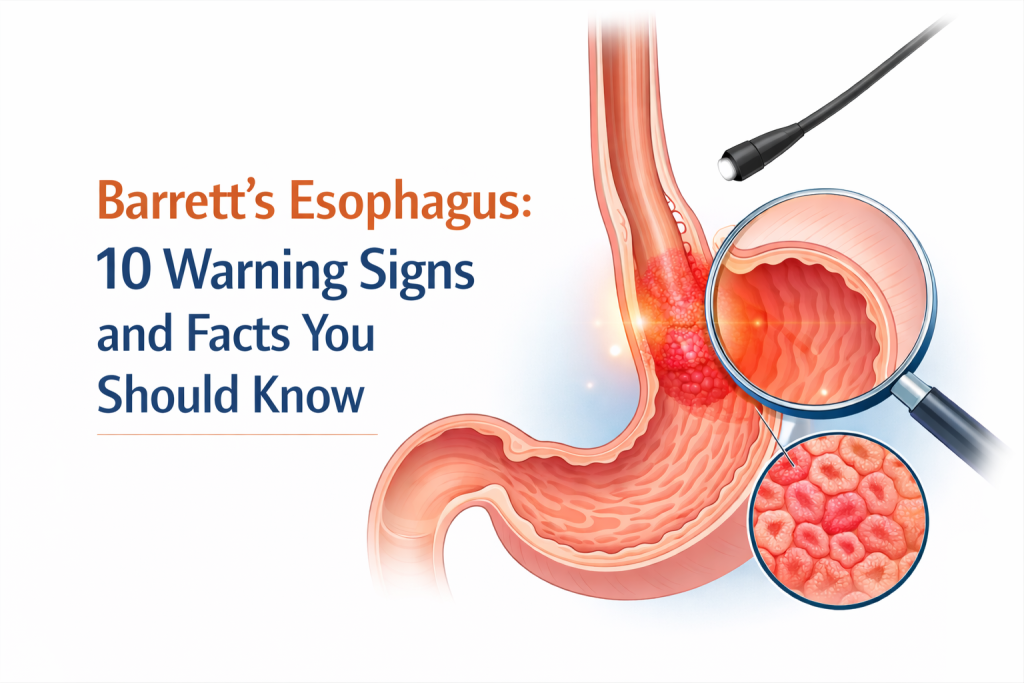
Barrett’s Esophagus occurs when the normal cells of the esophagus are replaced by specialized cells due to repeated exposure to acid. Under normal circumstances, the cells of the esophagus are flat, and they are called squamous cells. These cells are normally designed to withstand the passage of food.
However, because of the repeated exposure of the cells to acid, the cells may be damaged. Eventually, the body may replace the damaged cells with new ones, which are more similar to the cells of the intestine. This process is referred to as intestinal metaplasia.
Although the change in the cells of the esophagus may be considered protective against the effects of acid, the change also makes the patient more susceptible to the development of abnormal cells. This makes the change considered to be precancerous, and the patient has to be monitored.
Fact 1: The Esophageal Lining Can Change Over Time
The esophagus is defined as the muscular tube that transports food from the mouth to the stomach. Normally, the cells within the inner lining of the esophagus are flat, and they are referred to as squamous cells. They are only adapted to handle the passage of food, but are not adapted to handle stomach acid.
When stomach acid frequently enters the esophagus, it can cause irritation to the inner cells of the esophagus. This irritation can cause the body to change these normal cells to cells that are similar to the cells found within the intestine. This process is referred to as intestinal metaplasia, and it is an attempt for the body to adapt to the irritation.
This change within the body can actually cause the esophagus to be more prone to stomach acid, but it can also cause the body to require more medical monitoring, as abnormal cells can act differently than normal cells.
Fact 2: Barrett’s Esophagus Is Strongly Linked to Chronic Acid Reflux
One of the most significant factors related to the development of this condition is long-term acid reflux. Acid reflux happens when the contents of the stomach flow backward into the esophagus instead of staying in the stomach, where they belong.
The frequent occurrence of acid reflux has been associated with the development of what is called Gastroesophageal Reflux Disease. This happens when the lower esophageal sphincter, which is the muscle valve that prevents the flow of acid into the esophagus, becomes weak or starts to relax at the wrong time.
When acid reflux occurs over long periods of time, the exposure to the acid and digestive enzymes in the stomach has the potential to cause damage to the esophagus. This damage makes the esophagus more susceptible to changes.
The factors that increase the chances of acid reflux include obesity, smoking, and the consumption of fatty or spicy foods, as well as the presence of a hiatal hernia.
Fact 3: Many People With Barrett’s Esophagus Have No Symptoms
One of the difficult things about this condition is that many people don’t actually notice any symptoms that are directly linked to the tissue changes. Instead, symptoms are usually a result of the underlying problem of reflux.
Common symptoms of reflux include heartburn, a burning sensation in the chest, a sour taste in the mouth, and difficulty swallowing. Sometimes, there is a cough, a sore throat, or hoarseness.
Because these symptoms are common in many people’s daily lives, many ignore them and live with them for many years. That is why it is important to seek medical attention when symptoms of reflux persist or are frequent.
By doing this, doctors can identify any possible complications and start treatment before any problems occur.
Fact 4: Barrett’s Esophagus Can Increase the Risk of Esophageal Cancer
One of the main reasons doctors monitor this condition closely is its potential link to cancer of the esophagus. Although the majority of people with these tissue changes will never develop cancer, the risk is still higher compared to individuals with a normal esophageal lining.
The concern arises when the altered cells begin to develop abnormal growth patterns known as dysplasia. Dysplasia is categorized as low-grade or high-grade depending on the degree of abnormality observed under a microscope.
High-grade dysplasia carries a greater chance of progressing to cancer if not treated appropriately. Fortunately, regular medical monitoring allows doctors to detect these changes early and intervene before cancer develops.
Fact 5: Barrett’s Esophagus Is Diagnosed Through Endoscopy
The most effective way to examine the esophagus is through a procedure called Endoscopy.
During this procedure, a thin flexible tube with a small camera is gently passed through the mouth into the esophagus and stomach. The camera allows the doctor to carefully examine the lining of the upper digestive tract.
Endoscopy helps physicians identify areas where the tissue may look different from the normal lining. These areas may appear reddish or irregular compared to the surrounding tissue.
The procedure is typically performed under sedation and usually takes only a short time to complete. It is considered safe and is widely used to diagnose a variety of digestive conditions.
Fact 6: A Biopsy Confirms the Diagnosis
Although the doctor is able to visually detect abnormal tissues with the help of endoscopy, the actual diagnosis is achieved through microscopic examination of the tissues. This is achieved through a procedure referred to as a biopsy.
During the procedure, the doctor is also able to remove small pieces of tissue from the lining of the esophagus. These are then sent to the laboratory for examination by experts using a microscope.
The experts check for the presence of intestinal-type cells and whether there is dysplasia. This helps the doctor determine the best course of action for each patient.
Fact 7: Lifestyle Changes Can Protect the Esophagus
Lifestyle modifications play an important role in reducing acid reflux and preventing damage to the esophagus.
Maintaining a good weight is one of the best ways to avoid pressure on the stomach and thereby decrease the chances of acid reflux. Consuming smaller meals and not taking large meals late at night may also help to avoid backflow from the stomach.
Some other measures that may be taken to avoid acid reflux include avoiding spicy food, fried food, caffeinated products, chocolate products, and acidic drinks. Stopping smoking and reducing alcohol consumption may also be effective in improving health.
Raising the head of the bed may also be effective in reducing acid reflux during sleep.
Fact 8: Medications Can Help Reduce Acid Production
In most cases, doctors will prescribe medications that lower stomach acids. This will not only minimize the irritation but also aid in healing the esophagus.
The first medication is Omeprazole, which is a class of medications known as Proton Pump Inhibitors (PPIs). This class of medications works by stopping the pumps in the stomach lining from producing acids.
These medications are effective in controlling the symptoms of GERD by reducing the production of acids in the stomach to a very low level. This not only helps in controlling the symptoms of GERD but also helps in healing the tissue in the esophagus.
Fact 9: Advanced Treatments Are Available for Abnormal Cells
If there are signs of precancerous changes, doctors can recommend specialized treatment to remove and destroy abnormal cells.
Some of these treatments are carried out using endoscopic methods, which allow doctors to treat the affected area without major surgery. One treatment is radiofrequency ablation, which is a treatment using heat energy to destroy abnormal cells.
Another treatment is endoscopic mucosal resection, which involves removing abnormal cells. These treatments can prevent cancer while maintaining the natural structure of the esophagus.
Fact 10: Regular Monitoring Is Extremely Important
Individuals diagnosed with the condition are usually recommended to undertake regular medical monitoring. This mainly involves the use of endoscopic tests, which are undertaken on a regular basis to assess the esophageal cells and identify any changes.
The period of time before the tests are undertaken depends on the presence and extent of dysplasia. This helps the doctors identify any changes at an early stage, which can be treated effectively and reduce the risks of further complications.
This helps in the reduction of the risks of further complications, and the results are usually positive.
Conclusion
Changes in the esophageal lining, as caused by chronic acid reflux, are an important medical condition that should not be taken lightly. Although there are instances where individuals do not suffer from any symptoms, it is essential to understand that abnormal cells are present and therefore monitoring and management are necessary.
Knowledge of the causes, diagnosis, and treatment of this condition empowers patients to proactively work towards ensuring their digestive system is healthy and free from complications.
By seeking medical attention and receiving proper treatment, patients suffering from Barrett’s esophagus can effectively deal with their condition and live healthy lives. manage the condition and maintain a healthy quality of life.