
In my 20+ years as a gastroenterologist, one question I hear more than almost any other is: “Doctor, which probiotic should I take?” Patients ask me after antibiotics. They ask after months of bloating and irregular bowels. Some stumble across a list of the best probiotic supplements in India online and are not sure what to believe. The answer depends on who you are and what your gut is going through — but the good news is, the right probiotic supplements in India are well within reach, affordable, and backed by real science.
What Are Probiotics and Why Does Your Gut Need Them?
Your gut is home to roughly 100 trillion microorganisms. That is more bacteria than there are cells in your entire body. Most of them are doing useful work: breaking down food, producing vitamins, training your immune system, and keeping harmful bacteria in check.
The problem is modern life disrupts this balance constantly. Antibiotics, processed food, stress, poor sleep, chlorinated water — all of it chips away at your gut flora. When the balance tips, doctors call it dysbiosis, and the consequences show up everywhere: bloating, loose stools, constipation, acidity, skin breakouts, even fatigue. This is exactly why so many people in India are now turning to the best probiotic supplements in India as a daily gut health habit.
Probiotics are live bacteria and yeasts that, when taken in adequate amounts, restore and support this balance. The evidence is solid. A 2024 meta-analysis published in Cureus covering over 3,000 patients found that probiotics — particularly multi-strain combinations — significantly reduced abdominal pain and bloating in IBS patients, with reductions exceeding clinically meaningful thresholds.
Dahi and chaas do provide probiotics, and I always encourage patients to eat them daily. But getting consistent, high-potency, strain-specific bacteria through food alone is difficult. That is exactly why choosing the best probiotic supplement in India for your condition matters — and why I wrote this guide.
Signs Your Gut Microbiome Is Off Balance
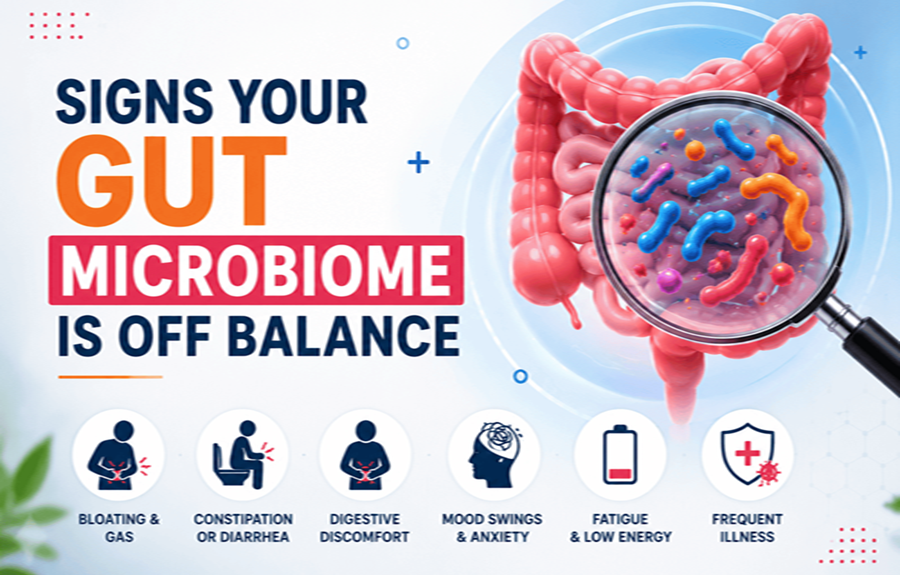
You do not always need a test to know something is wrong. These are the patterns I see in my clinic every week:
Bloating that arrives within an hour of eating — especially after dal, rajma, or maida-heavy meals — is one of the most common signs. So is unpredictable stool: sometimes loose, sometimes constipated, never quite normal. Frequent acidity, excessive gas, and a general feeling of heaviness after meals are others.
Interestingly, your skin often tells the story before your gut does. If you have been noticing unexplained breakouts, you might want to read about the connection between gut health and acne — it is more direct than most people expect.
Post-antibiotic diarrhoea is another clear signal. Every course of antibiotics kills both bad bacteria and good bacteria. Without active replenishment, recovery can take weeks or months.
Best Probiotic Supplements in India — My Recommendations
When patients ask me which are the best probiotic supplements in India for daily gut health, my answer is always the same: it depends on your gut’s specific problem. Here is how I think about it:
Best Probiotic Supplements India — Strains, Uses & Availability
Recommended by a gastroenterologist with 20+ years of clinical experience · medigest.in
← Scroll to see full table →
| Brand | Key Strain(s) | Best For | Availability |
|---|---|---|---|
| Bifilac Tablets India | L. acidophilus L. rhamnosus B. bifidum S. faecalis | Post-antibiotic Chronic bloating Mild IBS | OTC + Prescription |
| Econorm Sun Pharma | Saccharomyces boulardii | During antibiotics Traveller’s diarrhoea IBS-D | OTC + Prescription |
| Enterogermina Sanofi | Bacillus clausii (spores) | Repeated antibiotic use Children & elderly Gut restoration | OTC + Prescription |
| Vizylac Torrent | Lactic acid bacillus | Daily maintenance Bloating Indigestion | OTC + Prescription |
| Darolac Aristo Pharma | L. acidophilus B. longum S. boulardii S. thermophilus | Mixed IBS Broad gut support Post-antibiotic | OTC + Prescription |
1. Bifilac (Tablets India) This is the most widely prescribed multi-strain probiotic in India. It contains Lactobacillus acidophilus, L. rhamnosus, Bifidobacterium bifidum, and Streptococcus faecalis. I recommend it most often after antibiotic courses and for patients with chronic bloating or mild IBS. The multi-strain formula means it covers more ground than single-strain options. Available at virtually every chemist.
2. Econorm (Sachet / Capsule — Sun Pharma) Econorm contains Saccharomyces boulardii, a beneficial yeast rather than a bacteria. This matters because S. boulardii is resistant to antibiotics — so you can take it during a course, not just after. It is my first recommendation for antibiotic-associated diarrhoea and traveller’s diarrhoea. Studies consistently back S. boulardii for diarrhoea-predominant IBS as well.
3. Enterogermina (Sanofi) Contains Bacillus clausii spores. Spore-forming bacteria survive stomach acid far better than most strains, which is a real advantage. I prescribe this for patients who have had repeated antibiotic courses or for children and elderly patients who need a gentler probiotic. It is among the most prescribed single-strain probiotics in India, for good reason.
4. Vizylac (Torrent) A combination of Lactic acid bacillus with enzyme support. I find it useful for patients who present primarily with bloating and indigestion rather than diarrhoea. It is gentler, well-tolerated, and a reasonable daily maintenance probiotic for those who are not dealing with an acute issue.
5. Darolac (Aristo Pharmaceuticals) Another solid multi-strain option that is often interchangeable with Bifilac in clinical practice. Contains L. acidophilus, B. longum, S. boulardii, and S. thermophilus. The inclusion of both a bacterial and yeast strain gives it broader coverage. Useful for IBS patients with mixed symptoms.
A note on OTC vs prescription: most of the best probiotic supplements in India mentioned above are available over the counter, but please do not use this list to self-medicate for serious or prolonged symptoms. If your gut problems have lasted more than 3–4 weeks, see a doctor. These are adjunct therapy, not a substitute for diagnosis.
How to Take Probiotics the Right Way
This is where most patients go wrong, regardless of which probiotic they have picked. Even the best probiotic supplement in India will not help if you are taking it incorrectly. The bacteria in your capsule are alive — and they can be killed before they ever reach your intestine.
Take probiotics 30 minutes before a meal or with a small amount of food. Stomach acid levels are lower before eating, which gives the bacteria a better chance of surviving the journey. Do not take them with hot chai or hot water. Pair them with a prebiotic food — banana, oats, garlic, or onion — to give the bacteria something to feed on once they arrive.
Store them properly. Many probiotics are shelf-stable at room temperature, but check the label. Heat and humidity — both common in Indian summers — degrade live cultures faster than most people realise.
Consistency matters more than dosage. A daily habit for 4–8 weeks does far more than an irregular high-dose approach.
Common Mistakes That Waste Your Money
Taking a probiotic once and expecting results is the biggest one. Your gut microbiome did not fall apart overnight, and it will not recover overnight either.
Stopping probiotics the moment antibiotics finish is another common error. Continue for at least 2 weeks after completing an antibiotic course. The gut flora needs that recovery window.
Some patients also buy the most expensive option they find online, assuming higher CFU counts mean better results. More is not always better. The best probiotic supplements in India are not necessarily the most expensive ones — what matters is the right strain for your specific condition, not the biggest number on the box. A 5 billion CFU product with the correct strain will outperform a 50 billion CFU product with irrelevant ones.
Finally, probiotics work poorly on a poor diet. You cannot supplement your way out of daily maida, ultra-processed snacks, and no fibre. The bacteria need something to eat — and they thrive on the fibre you get from dal, sabzi, whole grains, and fruits.
Frequently Asked Questions
Q: Can I take the best probiotic supplements in India daily for a long time?
Yes, for most healthy adults, daily probiotic use is safe and beneficial. There is no standard upper limit. That said, if you have a compromised immune system, serious gut disease, or are on multiple medications, check with your doctor before starting. Long-term use should ideally be paired with a fibre-rich diet so the bacteria have fuel to thrive.
Q: Should I take probiotics during an antibiotic course or only after?
Both, actually — but with a gap. Take the probiotic 2 hours apart from your antibiotic dose so the antibiotic does not kill the probiotic bacteria before they can settle in. Saccharomyces boulardii (Econorm) is especially useful here because being a yeast, it is unaffected by antibiotics entirely.
Q: Are Indian probiotic brands like Bifilac and Darolac as good as imported ones?
Yes. Indian pharmaceutical-grade probiotics like Bifilac, Econorm, and Enterogermina use clinically studied strains and are subject to regulatory oversight. For most gut conditions, there is no need to spend 3–5x more on imported brands. What matters is the strain, not the country of origin.
Q: Can I get enough probiotics from dahi alone without supplements?
Dahi is genuinely useful and I encourage it daily. But the strain diversity, potency, and survival rate of commercial dahi varies considerably. If you are recovering from antibiotics, managing IBS, or dealing with persistent gut symptoms, food-based probiotics alone will likely not be sufficient. Think of dahi as maintenance and supplements as targeted therapy.
If your gut has been unsettled for a while — bloating, irregular stools, acidity, post-antibiotic discomfort — a well-chosen probiotic is a reasonable first step. The five best probiotic supplements in India listed above cover most of what I see in my clinic daily, and all are accessible without importing anything. Talk to your gastroenterologist before starting if symptoms are persistent, because the right probiotic for you depends on what your gut is actually dealing with.