

If your Instagram feed has turned into an endless scroll of chia pudding bowls and “what I eat for 40g of fiber” reels, you already know about fibermaxxing. The idea is simple: cram as much fiber into your day as possible, because fiber is supposedly the new protein. But talk to any gastroenterologist and you’ll hear the other half of the story. Fibermaxxing side effects are very real, and for a chunk of people trying this trend, they show up within days, not weeks.
This isn’t a reason to avoid fiber. Most Indians actually eat far less of it than they think, dal and sabzi habits aside. But going from “normal” to “maxxed out” overnight is where the trouble starts.
What’s interesting is how quickly fibermaxxing side effects have gone from a niche comment-section complaint to something dietitians are asked about weekly. Search “fibermaxxing side effects” and you’ll find hundreds of threads of people describing the same three things: bloating, gas, and a stomach that feels tighter than usual. None of that means fiber is the enemy. It just means the trend skipped a step.This isn’t a reason to avoid fiber. Most Indians actually eat far less of it than they think, dal and sabzi habits aside. But going from “normal” to “maxxed out” overnight is where the trouble starts.
What Is Fibermaxxing, Really?
Fibermaxxing started as a TikTok challenge: eat 30, sometimes 50 different plants a week, or hit 40 grams of fiber a day through smoothies, oat bowls, and fiber supplements stacked on top of regular meals. The trend caught on because it’s true that most people fall short. Dietitians at Mayo Clinic have pointed out that a large majority of women and men don’t meet the recommended daily fiber intake, so the underlying push isn’t wrong.
Here’s the thing, though. Recommended intake sits around 25 to 30 grams a day for most adults. Fibermaxxing content routinely pushes well past that, sometimes doubling it inside a week. Your gut doesn’t work on TikTok timelines. It adapts slowly, or it protests loudly.
This is really the whole story behind fibermaxxing side effects in one line: the target number went up faster than the timeline to reach it. A dietitian would tell you to add 25 grams over a month. A reel tells you to add it by Wednesday.
Why Your Gut Reacts Badly to Too Much Fiber
Fiber doesn’t get digested in your small intestine the way protein or fat does. It travels down to your colon mostly intact, where bacteria get to work fermenting it. That fermentation produces gas, mainly hydrogen and carbon dioxide, as a normal byproduct.
A small amount of fiber means a small amount of gas. A sudden flood of fiber means your colon bacteria are fermenting far more material than they’re used to, all at once. Add in fiber’s effect of pulling water into the gut and adding bulk to stool, and you get a stretched, uncomfortable bowel on top of the gas. This is exactly why fibermaxxing side effects tend to hit hardest in the first one to two weeks, before your gut bacteria adjust.
That fermentation process is also why fibermaxxing side effects rarely show up on day one. Most people report the bloating and gas creeping in around day three or four, once the bacterial fermentation load has properly built up.
5 Real Fibermaxxing Side Effects

Most fibermaxxing side effects trace back to one thing: speed. Your colon bacteria can absolutely handle 30 grams of fiber a day, they just can’t handle going from 12 grams to 40 grams overnight. Here’s what actually shows up when that jump happens, in order of how often gastroenterologists see it.
1. Bloating and gas. This is the big one, and it’s not just anecdotal. Research published in the journal Gut found that 15–20% of people prescribed high-fiber diets go on to experience pronounced gaseous symptoms, including bloating and uncomfortable abdominal distension, a stat worth remembering before you triple your fiber intake overnight. PubMed Central
2. Abdominal cramping. Once your colon fills with more bulk and gas than usual, the bowel wall stretches and can spasm. If you’ve ever eaten a giant bowl of rajma and felt a tight, crampy ache an hour later, that’s this mechanism at work.
3. Constipation, not relief. People assume more fiber always means smoother digestion. Not true. Insoluble fiber without enough water actually hardens stool and slows things down. Fibermaxxing without matching your water intake can backfire completely.
4. Diarrhea and loose motions. The opposite can happen too, especially with high-FODMAP fiber sources like certain beans or wheat bran, which pull water into the colon and speed up transit. Your gut, overnight, doesn’t know which way to swing.
5. Reduced mineral absorption. This one gets skipped in every viral reel. Very high fiber intake, sustained over time, can interfere with absorption of iron, calcium, and zinc. For anyone already managing iron deficiency, a common issue among Indian women, this matters more than a flat stomach ever will.
Interestingly, this overlaps with something we’ve covered before. If sluggish digestion after meals is a pattern for you already, it’s worth reading why you feel tired after eating, because a gut under fermentation overload can absolutely be part of that fatigue.
How to Increase Fiber Without Wrecking Your Gut
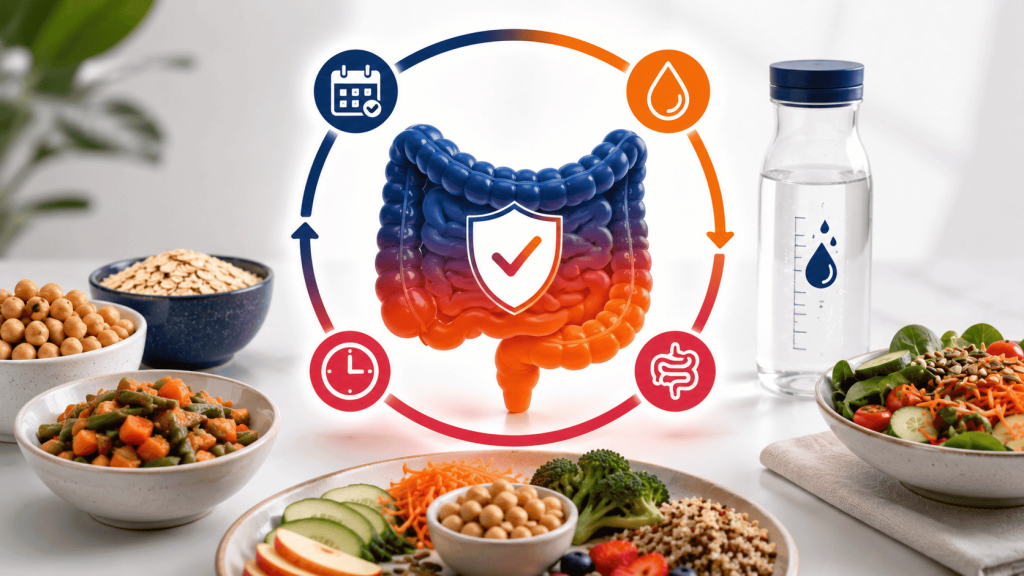
The goal isn’t zero fiber increase. It’s a gradual one.
Add one new fiber source every few days rather than five at once. A handful of chana, a bowl of oats, an extra katori of sabzi. Give your gut a week to adjust before adding more.
Water matters more than people think. Fiber needs fluid to move through your system without turning into a hard, dry mass. If you’re fibermaxxing but not drinking more water alongside it, you’re setting yourself up for the exact opposite of good digestion.
Tracking how you feel matters more than tracking grams. If you’re logging fiber intake purely to hit a number, you’re more likely to overshoot into fibermaxxing side effects territory than someone who’s simply paying attention to how their stomach feels after each meal.
Split fiber across the day instead of front-loading a smoothie with 25 grams in one sitting. Your colon bacteria ferment steadily, not in one giant batch.
And if you already deal with bloating-prone skin issues, this connects to gut health more broadly. It’s worth glancing at how gut imbalance shows up as breakouts, since a gut that’s constantly fermenting in overdrive doesn’t just affect your stomach.
Common Mistakes People Make
A lot of people jump from a low-fiber diet straight into a 40-gram-a-day challenge because a reel told them to. That jump is almost guaranteed to cause discomfort, and it’s the single biggest reason fibermaxxing gets a bad reputation online. The second mistake is relying entirely on fiber supplements or gummies instead of whole foods. Supplements skip the fiber diversity that beans, vegetables, and whole grains naturally provide, and diversity is what actually supports a healthy gut microbiome. The third mistake is ignoring existing gut conditions. People with IBS, diverticulitis flares, or IBD are often told by their doctors to go easy on fiber during active symptoms, yet trend culture treats “more fiber” as universally good advice for everyone.
If you take one thing away, let it be this: fibermaxxing side effects are a dosing problem, not a fiber problem. The people who avoid them aren’t eating less fiber, they’re just building up to it over two or three weeks instead of two or three days. That one difference is what separates “I feel lighter” from “I’m stuck in the bathroom.”
Frequently Asked Questions
Q: What are the main fibermaxxing side effects to watch for?
A: Bloating, gas, cramping, and changes in bowel habit are the most common ones, usually appearing in the first week or two of a sudden fiber increase. Reduced mineral absorption can show up later if very high intake continues long term.
Q: Is fibermaxxing actually bad for you?
A: Not inherently. The underlying goal, eating more fiber from whole foods, is genuinely healthy advice. The problem is speed. Doubling your fiber intake overnight is what causes the discomfort, not fiber itself.
Q: How much fiber should I actually be eating per day?
A: Most adults do well around 25 to 30 grams daily from a mix of dal, vegetables, fruit, and whole grains. There’s no need to chase 40 or 50 grams unless a doctor or dietitian has specifically recommended it for you.
Q: Can fibermaxxing make bloating worse if I already have IBS?
A: Yes, quite often. High-fermentable fibers can aggravate symptoms during an active flare, so anyone with IBS, diverticulitis, or IBD should talk to a doctor before ramping up fiber aggressively.
____________________________________________________________________________________________________________________
Fiber deserves the hype, honestly, most of us do need more of it. Just build up to it the way your gut can actually handle, not the way a 30-second reel can.
At this point, it’s worth stepping back and looking at the bigger picture around fibermaxxing side effects. None of what’s been covered here is a reason to swear off fiber, it’s a reason to respect how your gut actually processes it.
The reels that go viral show the “after” glow, not the three uncomfortable days that came before it. Real fibermaxxing side effects almost always trace back to the same root cause: a body asked to ferment far more fiber than it’s used to, in far less time than it needs to adjust. That’s not a fiber problem, it’s a pacing problem.
So if you’ve tried fibermaxxing and ended up bloated, gassy, or running to the bathroom more than usual, that doesn’t mean your gut is broken or that fiber “doesn’t agree with you.” It usually just means you skipped the slow build-up that keeps fibermaxxing side effects from happening in the first place. Give it two to three weeks instead of two to three days, and most people find the same fiber goals land without any of the discomfort the trend is now known for.