
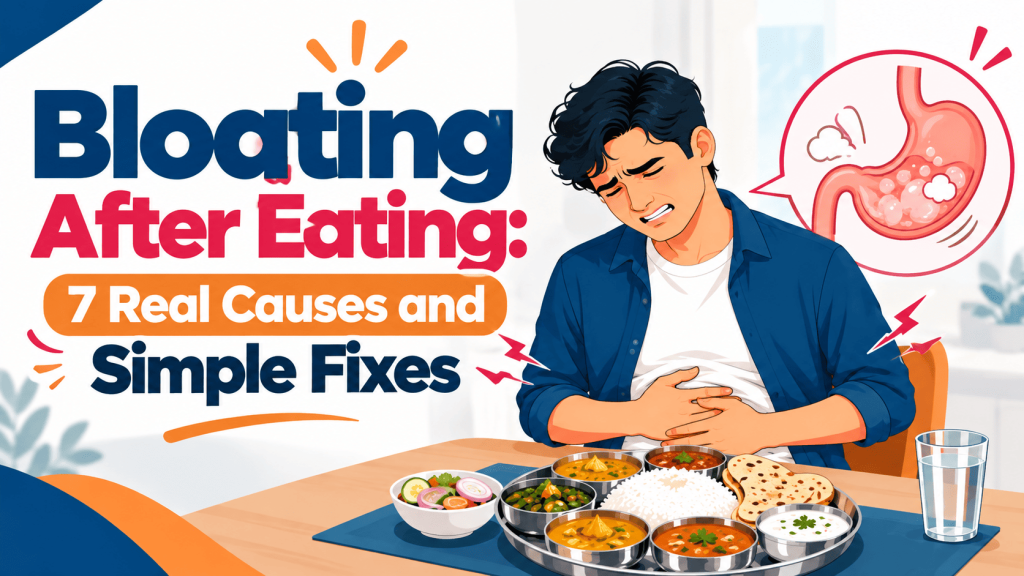
Bloating after eating is one of those things most of us quietly put up with. Your trousers feel tighter by the second roti, and by evening you’re loosening your belt under the desk.
Ever wondered if bloating after eating is normal, or if your gut is trying to tell you something?” Sometimes it’s nothing serious. Sometimes it’s worth a closer look. Here’s how to tell the difference.
What Bloating Actually Is
Bloating is the feeling of pressure, fullness or trapped gas in your belly. Distension is different. That’s when your stomach visibly swells.
You can have one without the other. A review by Whorwell and Houghton found that bloating affects up to 96% of people with functional gut disorders and about 30% of the general population.
Thirty percent. That’s nearly one in three people. So you’re in very large company.
The same review lists several possible mechanisms, including gas buildup, fluid retention, food intolerance, weak abdominal muscles and a gut that is simply more sensitive than average. That’s why one fix never works for everyone.
7 Real Causes of Bloating After Eating
1. Eating too fast
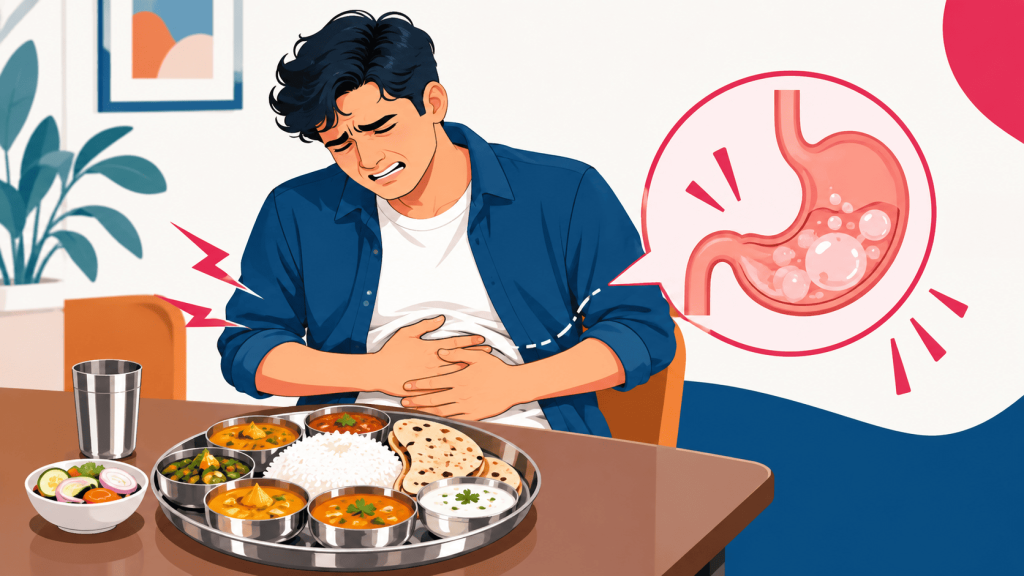
Rushed meals are a quiet driver of bloating after eating, because you swallow air with every bite.. That air has to go somewhere, and your belly is the first stop. Gulping tea, talking while eating and chewing gum all add to it.
2. Gas-heavy foods
Rajma, chole, cabbage, cauliflower, onion and garlic are the usual suspects. They contain fermentable carbohydrates that gut bacteria break down, and gas is the by-product.
A 2022 review in Frontiers in Nutrition found promising evidence that a low-FODMAP diet reduces bloating in people with IBS. It also found no solid evidence for going gluten-free just to cut bloating.
3. Lactose
Many adults make less lactase, the enzyme that digests milk sugar, as they get older. A glass of milk or a cup of milky chai can set off bloating after eating within an hour or two. Dahi and chaas are often easier to handle because fermentation lowers the lactose.
4. Constipation
When stool sits in your gut longer, gas builds up behind it. A 2014 review in the World Journal of Gastroenterology noted that up to 80% of people with constipation report bloating and distension. If you’re not going regularly, start there.
5. Irritable bowel syndrome and the gut-brain link
In IBS, the gut nerves overreact to normal amounts of gas. Stress makes it worse. That’s why bloating can flare during exams, deadlines or a bad week at home, even when your food hasn’t changed.
6. Food intolerance or celiac disease
Some people react to specific foods, and a few have celiac disease, an immune reaction to gluten. Before you spend money on a panel, read whether food allergy tests are actually useful, because many people buy the wrong test for the wrong problem.
7. Slow stomach emptying after heavy meals
Fried, oily food like pakoras, parathas and puris leaves the stomach slowly. You feel full, heavy and puffed up for hours. That sleepy, stuffed feeling often shows up alongside it, which is a separate topic covered in this post on why you’re always tired after eating.
What Actually Helps
Not glamorous advice, but it works for a lot of people.
Slow down. Aim for 20 minutes per meal, and put the phone away. Chew properly, especially dal and roti.
Walk for 10 to 15 minutes after dinner. Many people find it moves gas along. Evidence is modest, but it costs nothing.
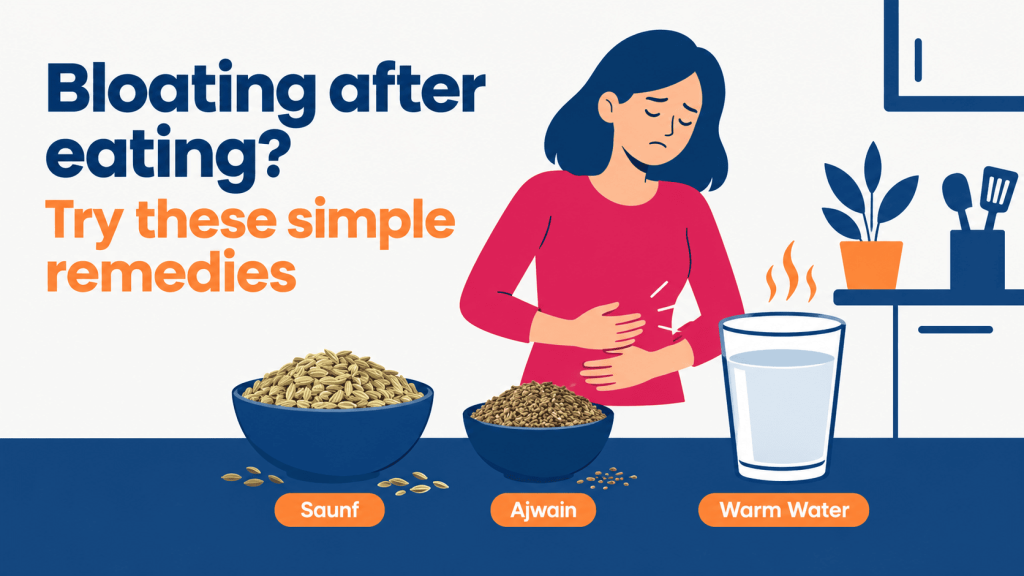
Cook beans and dal well. Soak rajma and chana overnight and pressure cook them until soft. Adding hing and jeera is a traditional habit, and plenty of families swear by it, though research on those spices is thin.
Saunf and ajwain after meals are the same story. Safe for most people and widely used, but don’t expect a guarantee.
Keep a simple food diary for two weeks. Write down what you ate, when, and how bloated you felt. Patterns show up faster than you’d think.
If constipation is involved, increase fibre slowly and drink enough water. Jumping from little to a lot overnight can make bloating worse.
When to See a Doctor
Bloating after eating that comes and goes is usually harmless. These signs need a proper check-up: unplanned weight loss, blood in your stool, black stools, repeated vomiting, trouble swallowing, or pain that wakes you at night.
New bloating that doesn’t settle over several weeks also deserves attention, particularly in women over 50. A gastroenterologist can decide whether you need blood tests, a stool test or an endoscopy.
Common Mistakes People Make
The biggest mistake with bloating after eating is cutting out whole food groups on the advice of a reel. Dropping dairy, gluten and pulses together can leave you short on nutrients and no clearer about the real trigger. The Frontiers review specifically warns about the risks of elimination diets and suggests working with a nutrition expert.
Another is buying probiotics for every bloated day. A 2011 review of treatment trials found some strains helped in IBS, but evidence for functional bloating alone is thin.
The third is ignoring constipation because it feels like a separate problem. It usually isn’t.
Frequently Asked Questions
Q: Is bloating after eating normal?
A: Occasional bloating after eating is common, and a big meal or a plate of rajma can easily cause it. If it happens most days, lasts for hours or comes with pain, it’s worth getting checked.
Q: How long should bloating after eating last?
A: Most meal-related bloating settles within a few hours. If yours lasts more than a day or keeps coming back for weeks, see a doctor.
Q: Does drinking more water reduce bloating?
A: It can, mainly if constipation is part of the picture. Water helps stool move along, which eases the pressure behind it. It won’t fix bloating caused by lactose or IBS on its own.
Q: Should I take probiotics for bloating?
A: Results are mixed. Some strains have helped people with IBS, but there’s no single probiotic that works for everyone. Try fixing eating speed, constipation and obvious food triggers first.
Next Step
“Write down what you eat and when bloating after eating hits for the next two weeks. If the pattern points to one food, try cutting only that one. If nothing clears up, take the diary to a gastroenterologist. It makes the consultation far more useful.”