

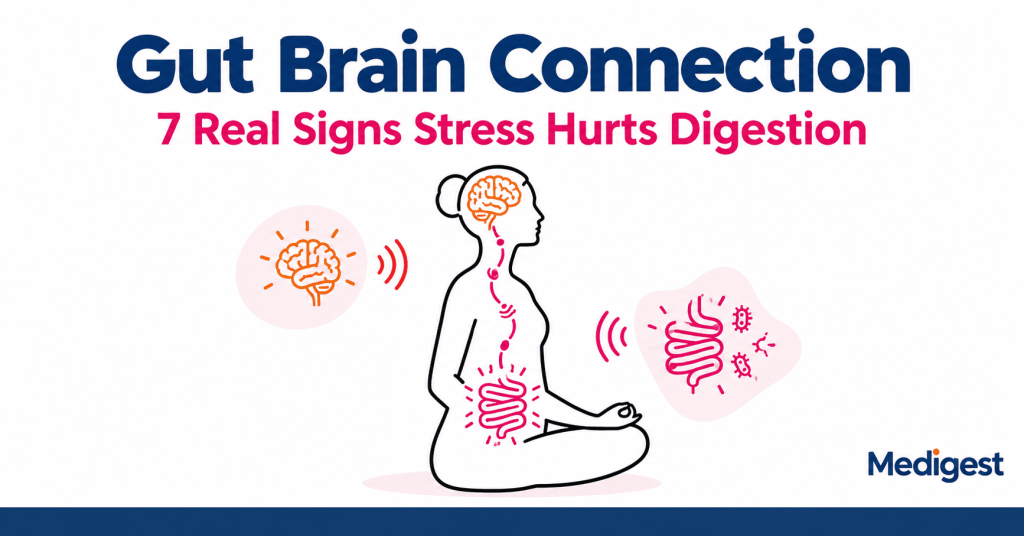
You know that feeling before an exam or a big presentation when your stomach just drops? That is not nerves talking. That is the gut brain connection, and in 2026 it has become one of the most talked about topics in gut health, moving way beyond just digestion into anxiety, brain fog, and mood.
Doctors used to treat the stomach and the mind as separate departments. Turns out they are on the same phone line, texting each other constantly.
What Is the Gut Brain Connection, Really?
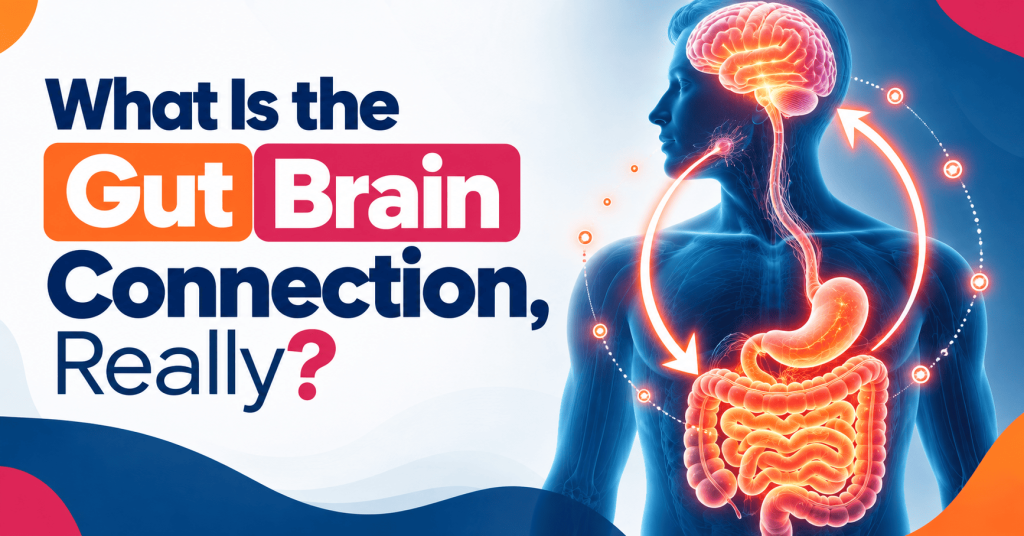
Your gut has its own nervous system, called the enteric nervous system, with roughly 100 million neurons lining your intestines. That is more than your spinal cord.
This system talks to your brain through the vagus nerve, a long cable running from your brainstem down to your gut. Signals travel both ways. Stress in your head can slow digestion or speed it up. And an inflamed, imbalanced gut can send signals back that affect your mood.
A 2026 review in the journal Quality in Sport looked at exactly this pathway, tracing how gut bacteria and their byproducts influence anxiety and depression through the vagus nerve and the immune system. This is not fringe wellness talk anymore. It is showing up in serious medical journals every few months now.
Why This Matters More in India
Between traffic, work deadlines, joint family pressures, and exam season for students, most of us are running on some baseline level of stress most days. Add in erratic meal timings and too much chai on an empty stomach, and the gut brain connection gets tested constantly.
7 Signs Your Gut Brain Connection Is Under Stress
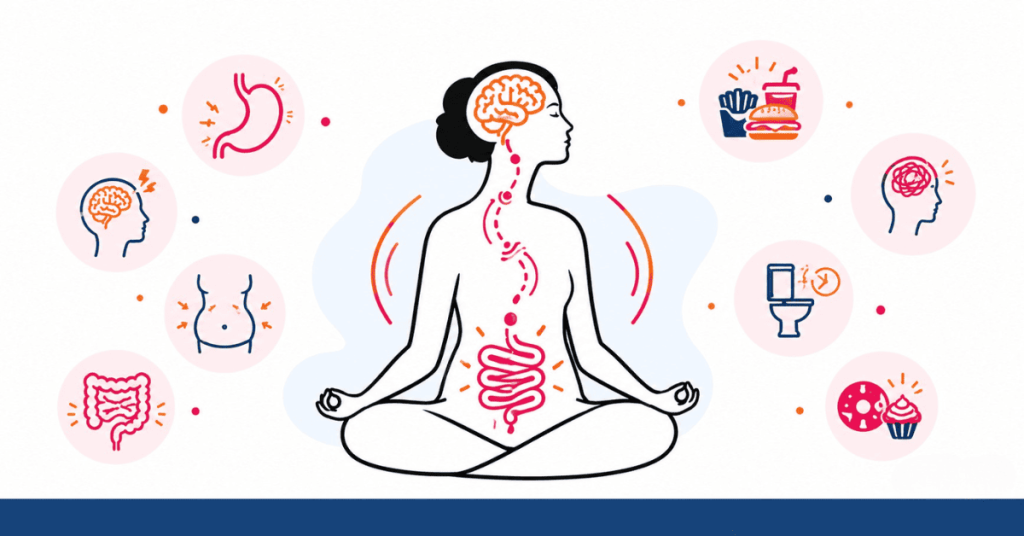
1. Your stomach acts up before anything stressful. Butterflies, loose motions, or a tight knot in your stomach before an interview or a flight are your enteric nervous system reacting to cortisol.
2. Bloating that has no clear food trigger. You did not eat anything unusual, yet you feel like a balloon by evening. Chronic stress slows gut motility, which lets gas build up.
3. Brain fog after meals. If you feel mentally slow or foggy after eating, especially heavy or sugary food, it may connect back to how your gut handles inflammation. We covered a related pattern in our piece on why you feel tired after eating, which is worth a read if this sounds familiar.
4. Irregular bowel habits during stressful weeks. Constipation one week, loose stools the next, with no diet change in between. This back and forth is classic gut brain connection behaviour, especially in people with IBS.
5. Sudden food intolerances. Foods you always tolerated fine suddenly cause discomfort during a stressful phase. Your gut lining and immune response are more reactive when stress hormones stay elevated.
6. Low mood that improves when your gut settles. Some people notice their anxiety eases up on days their digestion is calm, almost like the two are on the same schedule. That is not a coincidence.
7. Cravings for sugar or fried food when anxious. Stress alters your gut bacteria, and some research links this shift to stronger cravings for exactly the foods that make gut inflammation worse. A frustrating loop.
What You Can Actually Do About It
You cannot meditate your way out of a genuinely unbalanced gut, and you cannot fix chronic stress with just curd and fibre. Both sides need attention.
Start with fibre and fermented foods your body already knows, like dahi, chaas, and idli batter, rather than jumping straight to imported supplements. Fibre feeds the bacteria linked to calmer inflammation responses, and fermented foods add live cultures without any guesswork.
Eat at roughly the same times each day if you can manage it. Your gut runs on rhythm, and constant skipping and binging confuses that rhythm more than any single “bad” meal does.
Slow, deep breathing for even two minutes before a meal activates the vagus nerve and tells your gut it is safe to digest properly. Not glamorous advice, but it works, and it costs nothing.
Walk after dinner instead of lying down immediately. A short walk supports gut motility and gives your mind a break from screens at the same time, which helps both ends of the gut brain connection.
If symptoms are persistent, a gastroenterologist can check for underlying issues like IBS or SIBO rather than assuming it is “just stress.” A study reviewed on PubMed Central found a real bidirectional link between gut microbiota changes and anxiety disorders, which is exactly why self-diagnosing everything as pure stress can sometimes miss the real issue.
Common Mistakes People Make
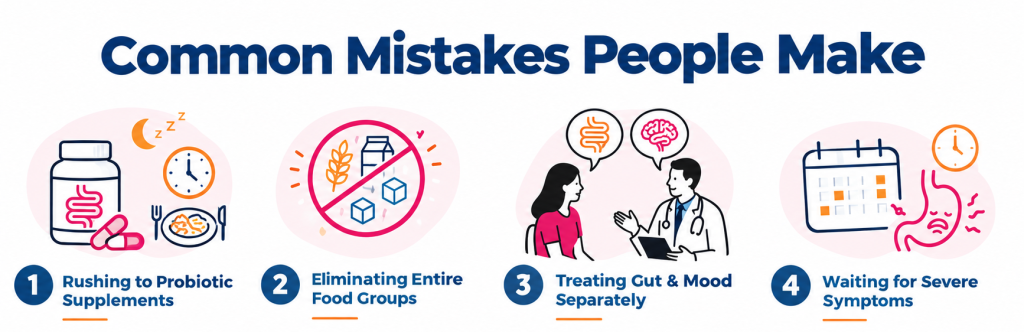
A lot of people jump straight to probiotic supplements the moment they read about the gut brain connection, without fixing sleep or meal timing first. Supplements can help, but they are not doing much if you are still sleeping five hours and eating dinner at 11pm.
Another common one is cutting out entire food groups based on a random Instagram reel. Gluten free, dairy free, sugar free, all at once, with no real testing behind it. This often stresses the gut more through restriction and social anxiety around eating, which defeats the purpose.
People also tend to treat gut symptoms and mood symptoms as two separate doctor visits. Mentioning both to the same physician, whether a gastroenterologist or a general physician, gives a much clearer picture than describing only the stomach pain or only the anxiety.
Finally, many wait until symptoms are severe before addressing anything. Early, boring, consistent habits work far better than a dramatic 7 day reset done once a year.
Frequently Asked Questions
Q: Can the gut brain connection cause anxiety on its own?
A: It can contribute to it. Research increasingly shows gut bacteria imbalances can influence anxiety through the vagus nerve and immune signalling, though anxiety usually has multiple causes working together, not just gut health alone.
Q: How long does it take to see improvement in gut brain symptoms?
A: Most people notice smaller changes like less bloating within two to three weeks of consistent meal timing and fibre intake, while mood related improvements often take longer since they depend on several factors beyond just diet.
Q: Are probiotics enough to fix the gut brain connection?
A: Probiotics can help specific strains and specific people, but they work best alongside good sleep, stress management, and regular meals rather than as a standalone fix. Think of them as one piece, not the whole puzzle.
Q: Should I see a doctor if stress keeps upsetting my stomach?
A: Yes, especially if symptoms are frequent, painful, or affecting your weight or daily routine. A gastroenterologist can rule out conditions like IBS or SIBO instead of everything being labelled as stress.
Your gut and your mind are not going to stop talking to each other, so the more useful move is managing both sides together. Start with your next meal timing and your next stressful moment, and notice how closely linked they really are.