
Many people only learn they have a "CBD stone" after an ultrasound or MRCP done for pain or yellow eyes. The words that follow, ERCP, stent, sphincterotomy, can sound alarming. In reality, a stone in the bile duct is one of the most common problems we treat with endoscopy, and in most people it can be removed without any cut on the body. Here is what you need to know.
What is a CBD stone?
CBD stands for common bile duct, the tube that carries bile from the liver and gallbladder into the small intestine. A CBD stone, also called a common bile duct stone or choledocholithiasis, is a stone sitting inside this tube. Most of them form in the gallbladder and slip down into the duct. A few form in the duct itself, especially in older people or after gallbladder surgery.
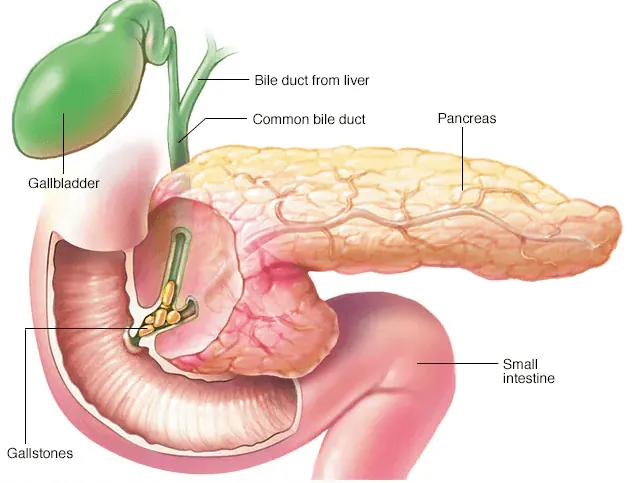
A gallbladder stone can sit quietly for years. A stone in the bile duct is different, because the duct is narrow. When a stone blocks it, bile backs up into the liver, and that causes trouble.
Symptoms of a CBD stone
- Pain in the upper right or middle of the abdomen, often after meals, sometimes going to the back.
- Yellow eyes and skin (jaundice), dark urine and pale stools.
- Itching.
- Fever with chills, which can mean the bile has become infected (cholangitis).
- Severe upper abdominal pain with vomiting, if the stone has triggered acute pancreatitis.
Some people have no symptoms at all, and the stone is found on a scan or because of abnormal liver tests.
Fever, shivering and jaundice together are an emergency. Infected bile can make people very ill within hours. If this happens, go to the nearest hospital emergency department; do not wait for a clinic appointment.
Who gets CBD stones?
Anyone with gallbladder stones can get them, so the risk follows the same pattern: women, people over forty, people who are overweight or have diabetes, and anyone who has lost weight very fast. In India we also see them in younger people with gallstones that were found years earlier and left alone. Older adults can develop new stones in the duct even after the gallbladder has been removed.
How it is diagnosed
Blood tests show a raised bilirubin and liver enzymes. An ultrasound often shows a widened bile duct and gallbladder stones, though the duct stone itself can be hard to see. An MRCP, a special MRI of the bile ducts, shows stones clearly without any procedure. When the stone is small and other scans are unclear, an endoscopic ultrasound (EUS) can find it from inside. We explain the difference between the two main tests in what is ERCP.
CBD stone treatment: why ERCP is usually the answer
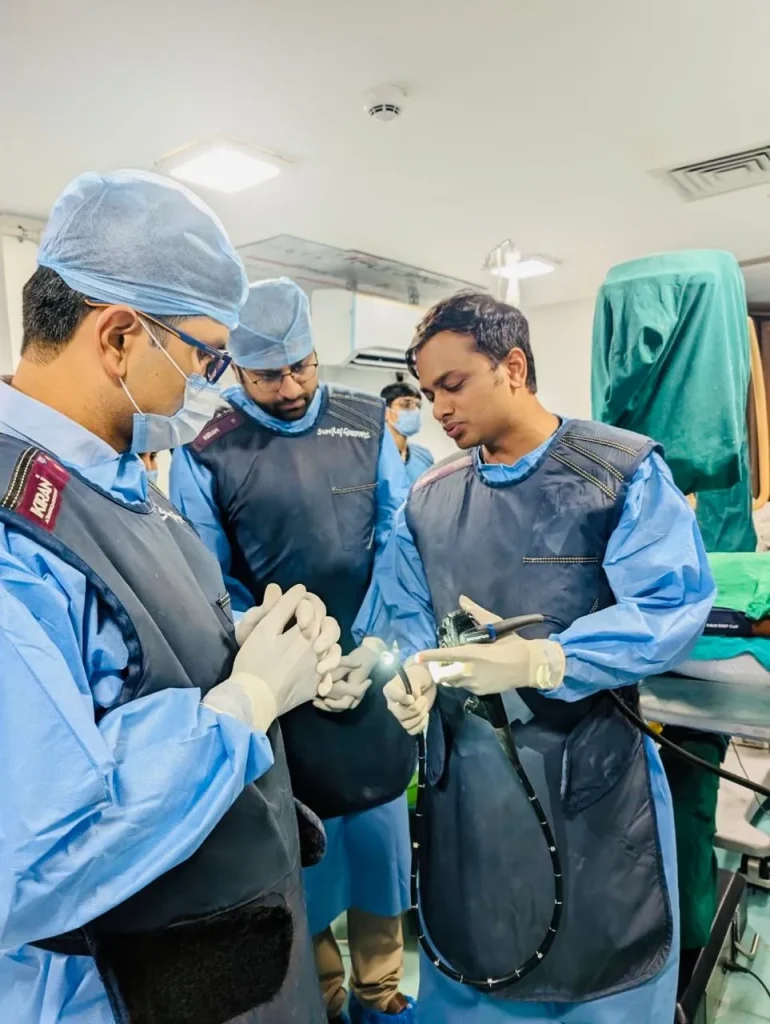
A stone in the bile duct rarely passes on its own once it causes symptoms, and medicines do not dissolve it. The standard treatment is an ERCP procedure. A special side-viewing endoscope is passed through the mouth to the opening of the bile duct in the small intestine. Through it, the doctor:
- Passes a thin tube into the bile duct and injects dye to see the stones on X-ray.
- Makes a small cut in the muscle at the opening of the duct (sphincterotomy) to widen it.
- Pulls the stones out with a small balloon or basket into the intestine, where they pass out naturally.
- Places a temporary plastic stent if the duct cannot be fully cleared, to keep bile flowing.
There is no cut on the skin. ERCP is done under sedation or anaesthesia, usually takes 30 to 60 minutes, and most people go home within a day.
What about very large stones?
Some stones are too big to pull out whole. These can be broken with a crushing basket, or with a laser or shock-wave probe passed into the duct through a tiny camera (cholangioscopy). Sometimes a stent is placed for a few weeks to let the stone shrink and loosen, and a second ERCP clears it. Open surgery for bile duct stones is now rarely needed.
Is ERCP safe?
ERCP is a specialised procedure and carries more risk than a routine endoscopy. The most common problem is pancreatitis, which happens in a small number of patients and is usually mild. Bleeding, infection and, rarely, a tear are the other risks. Leaving a stone in the duct carries its own, often larger, risks: repeated pain, infection, jaundice and pancreatitis. The doctor will go through this with you before the procedure.
After the stone is removed: do I need gallbladder surgery?
Usually, yes. If the stone came from the gallbladder, more stones are likely to follow. Removing the gallbladder by keyhole surgery (laparoscopic cholecystectomy), often within a few weeks of the ERCP, prevents this. People who are very old or unfit for surgery may be managed without it. If a stent was placed, it needs to be removed or changed within about three months, so keep the date your doctor gives you.
Recovery and diet
Most people start liquids a few hours after ERCP and a light diet the next day. Jaundice and itching improve over days to a couple of weeks as the bile drains. Call the doctor if you develop severe abdominal pain, fever or vomiting after going home.
ERCP cost and insurance
The cost of ERCP depends on what is needed: simple stone removal, a stent, or stone-breaking with cholangioscopy, plus the hospital and room category. As a hospital procedure, ERCP is usually covered by health insurance. After looking at your scans, the clinic gives you an estimate.
CBD stone treatment in Delhi
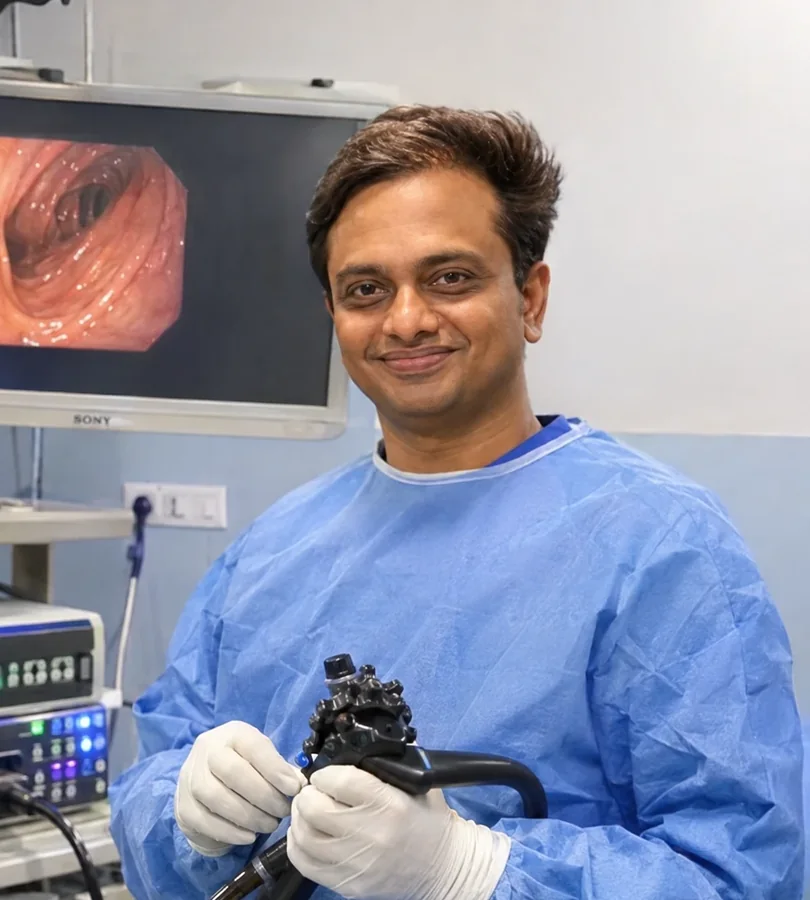
Dr. Shrihari Anikhindi is an advanced endoscopist who performs ERCP at Apollo Hospitals. Patients from across Delhi start with a consultation at Medigest in West Punjabi Bagh, where the ultrasound, MRCP and blood tests are reviewed and the procedure is planned. If you live in Punjabi Bagh, Paschim Vihar, Rajouri Garden or nearby, the clinic is close by for follow-up visits after the procedure. You can book a consultation or send your reports for an online consultation.
A CBD stone needs treatment, but it is very treatable. Most people are back to normal meals within a few days and never think about it again once the gallbladder is dealt with.
Medically reviewed by Dr. Shrihari Anikhindi, MBBS, MD, DNB (Gastroenterology), MRCP (SCE), gastroenterologist and advanced endoscopist at Medigest Gastro, Liver & Endoscopy Clinic, West Punjabi Bagh, Delhi. This article is general information. Please talk to your own doctor about your health.