
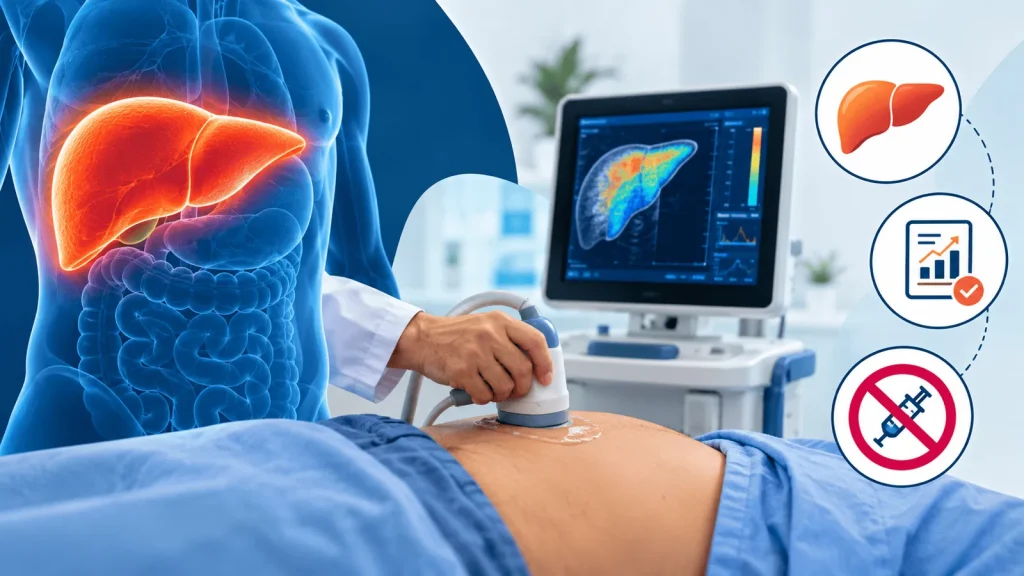
"Grade 2 fatty liver" is one of the most common lines we see on ultrasound reports in Delhi. Often the scan was done for something else entirely: a stomach ache, a health check-up, a kidney stone. Then this phrase turns up at the bottom of the report and people start searching. Here is what it means, what it does not mean, and what we actually advise.
What does grade 2 fatty liver mean?
On an ultrasound, a liver with fat in it looks brighter than normal. The radiologist grades this brightness:
- Grade 1 (mild): the liver is a little brighter, but its blood vessels and the diaphragm behind it are seen clearly.
- Grade 2 (moderate): the liver is brighter, and the walls of the small blood vessels inside it are harder to see.
- Grade 3 (severe): the liver is so bright that the vessels and the back of the liver are hard to see at all.
So grade 2 means there is a moderate amount of fat in the liver. That is worth taking seriously. But here is the part most reports do not say: the grade tells you about fat, not about damage. An ultrasound cannot measure scarring (fibrosis), and scarring is what decides whether fatty liver will cause trouble later.
Is grade 2 fatty liver dangerous?
On its own, usually not yet. Most people with grade 2 fatty liver feel completely well, and their liver still works normally. The risk is what happens over the next ten or twenty years if nothing changes. In some people, the fat causes inflammation (steatohepatitis, previously called NASH, now MASH), which slowly leads to scarring and, in a small number, cirrhosis.
Fatty liver is also a sign of what is going on in the rest of the body. People with fatty liver are more likely to have diabetes, high cholesterol, high blood pressure and heart disease. Honestly, for most of our patients, the heart is a bigger risk than the liver. That is good news in a way, because the same changes protect both.
Why it happens
The most common cause is metabolic: extra weight around the waist, insulin resistance, pre-diabetes or diabetes, and high triglycerides. Many Indians develop fatty liver at a lower weight than people in the West, so "I'm not overweight" does not rule it out. We see plenty of slim young men in their thirties with a grade 2 report and a waistline that has crept up.
Other causes include alcohol (even moderate amounts add up), some medicines, rapid weight loss, an underactive thyroid and, less often, hepatitis C or inherited conditions. Part of the first visit is making sure we are not missing one of these.
The test that answers the real question
Because ultrasound cannot see scarring, the next step for grade 2 fatty liver is usually a FibroScan test. It measures both the fat (CAP score) and the stiffness of the liver (kPa) in about 15 minutes, with no needles. If the stiffness is normal, you can relax a little and focus on lifestyle. If it is raised, we know to watch the liver more closely. Our guide to the FibroScan report and normal range explains the numbers.
We also check liver blood tests (SGOT, SGPT), sugar (HbA1c), cholesterol and triglycerides, platelets and sometimes thyroid and hepatitis tests. A simple score called FIB-4, worked out from your age and routine blood tests, also helps.
Can grade 2 fatty liver be reversed?
Yes, in most people. Fat in the liver responds quickly to changes in weight and diet, often within months. This is what actually works:
- Lose weight slowly. Losing 5 percent of your body weight reduces liver fat. Losing 7 to 10 percent can reduce inflammation and even some scarring. For someone who weighs 80 kg, that is 6 to 8 kg over six months to a year. Crash diets can make the liver worse.
- Move every day. Aim for about 150 minutes a week of brisk walking, cycling or swimming, plus some strength exercise. Exercise reduces liver fat even before the scale moves.
- Cut sugar and refined flour. Sweet tea, packaged juices, cold drinks, mithai, biscuits and maida-based snacks are the biggest problem in most Indian diets. Fructose in sweet drinks goes straight to the liver.
- Watch portions of rice and roti. You do not need to stop them; just make half your plate vegetables and dal and add protein such as paneer, eggs, curd or sprouts.
- Avoid alcohol while the liver is recovering.
- Control diabetes, blood pressure and cholesterol with your doctor.
Plain coffee without sugar seems to be good for the liver, which most people are happy to hear. Our list of foods that help the liver has more ideas.
What about medicines and liver tonics?
There is no tablet that removes liver fat on its own, and the "liver detox" syrups and capsules sold online have no good evidence behind them. Some can even harm the liver. For people with proven inflammation or scarring, there are now medicines that help, and some diabetes and weight-loss medicines also reduce liver fat. These need a doctor's assessment first, so please do not start anything on your own.
How often should it be checked?
If the FibroScan shows little or no scarring, we usually repeat the blood tests and FibroScan after 6 to 12 months to see how the fat is responding. If there is significant scarring, follow-up is closer and may include an endoscopy. Repeating the ultrasound every few months is not very useful, because the grade changes slowly and does not show scarring.
When to see a doctor sooner
See a doctor soon if you have grade 2 or grade 3 fatty liver together with diabetes, raised liver enzymes, a low platelet count, regular alcohol use, or a family history of cirrhosis. Yellow eyes, swelling of the belly or legs, vomiting blood or black stools need urgent care at a hospital.
Fatty liver care in West Punjabi Bagh, Delhi
At Medigest, Dr. Shrihari Anikhindi sees many patients with fatty liver from Punjabi Bagh, Paschim Vihar, Rajouri Garden, Janakpuri and the rest of Delhi. The FibroScan is done at the clinic itself, and you leave with your result explained and a plan that fits your routine. You can read more about our liver specialist care in Delhi, book a visit, or start with an online consultation if you have your reports ready.
A grade 2 report is not a diagnosis to fear. It is an early warning, and early warnings are the best kind, because there is still time to do something about them.
Medically reviewed by Dr. Shrihari Anikhindi, MBBS, MD, DNB (Gastroenterology), MRCP (SCE), gastroenterologist and advanced endoscopist at Medigest Gastro, Liver & Endoscopy Clinic, West Punjabi Bagh, Delhi. This article is general information. Please talk to your own doctor about your health.