
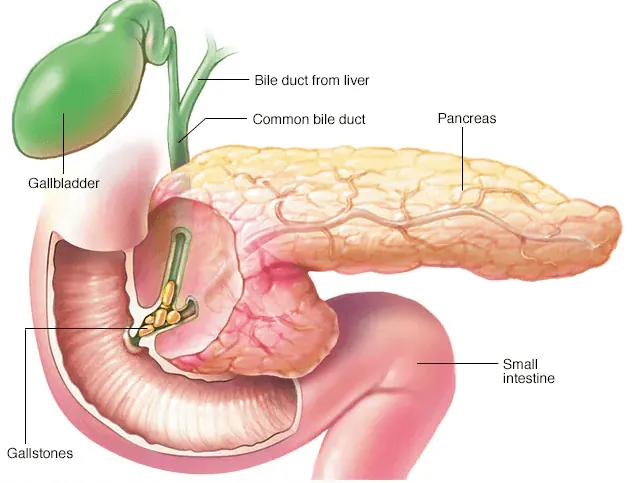
Patients with bile duct problems often hear two very similar words in the same week: MRCP and ERCP. One doctor orders an MRCP, another talks about an ERCP, and it is easy to think they are the same test. They are not. One is a scan; the other is a procedure that can also treat the problem. Here is the difference in plain words, and how we decide which one you need.
MRCP: a special MRI of the bile ducts
MRCP stands for magnetic resonance cholangiopancreatography. It is an MRI scan tuned to show fluid in the bile ducts, gallbladder and pancreatic duct very clearly. You lie in the MRI machine for about 20 to 40 minutes. Nothing goes inside your body, no sedation is needed and usually no injection either. You go home straight after.
MRCP is very good at showing:
- Stones in the common bile duct
- Narrowing of the bile duct or pancreatic duct
- Widened ducts and the level where the blockage is
- Cysts of the pancreas and choledochal cysts
- Unusual anatomy before surgery
Its limits: MRCP only takes pictures. It cannot remove a stone or open a blockage. Very small stones, under about five millimetres, can be missed. Some people cannot have an MRI, for example with certain pacemakers or metal implants, and some find the closed machine hard to tolerate.
ERCP: an endoscopic procedure that diagnoses and treats
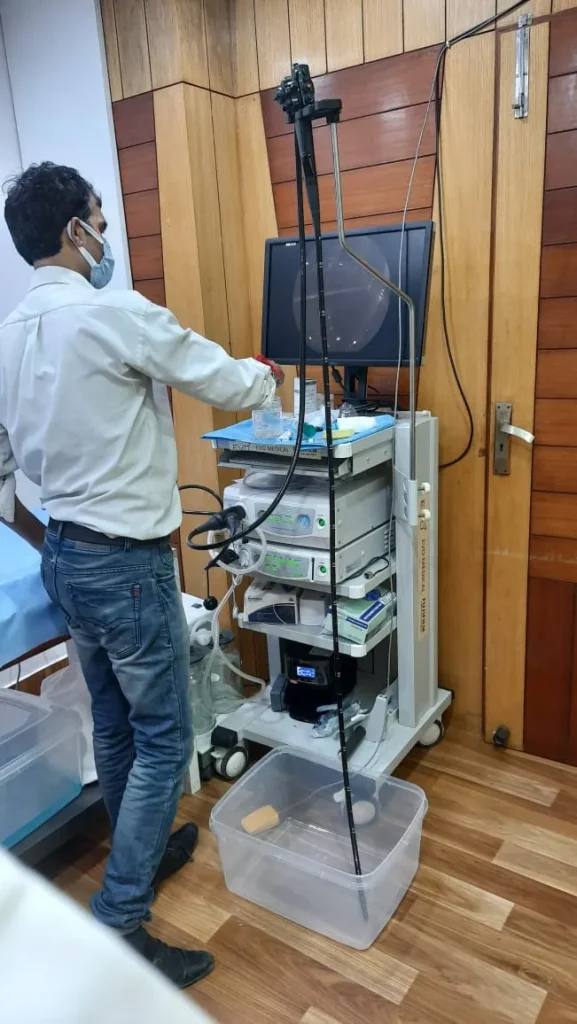
ERCP stands for endoscopic retrograde cholangiopancreatography. Under sedation or anaesthesia, a side-viewing endoscope is passed through the mouth to the opening of the bile duct in the duodenum. A thin tube is passed into the duct, dye is injected, and X-rays show the ducts. If a stone or narrowing is seen, it can be treated in the same sitting: stones removed, a small cut made at the opening of the duct, or a stent placed.
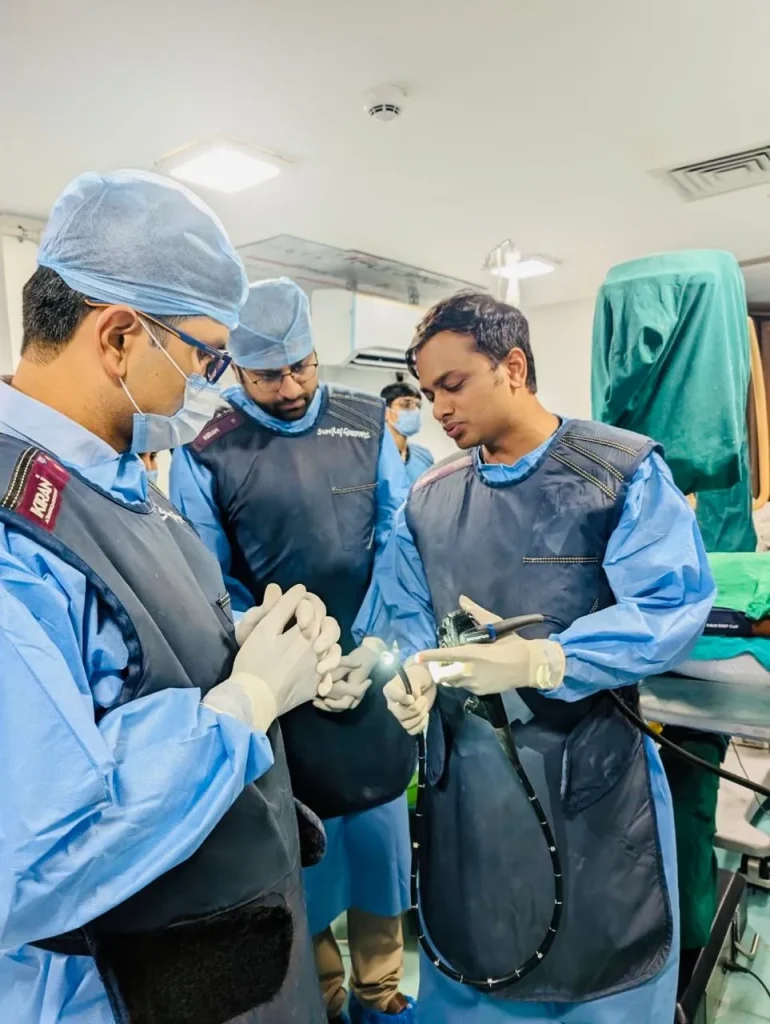
Because ERCP is an invasive procedure, it carries risks that MRCP does not. Pancreatitis is the most common, in a small number of patients, and bleeding, infection or a tear are rarer. You can read about the full ERCP procedure, preparation and recovery on its own page.
MRCP vs ERCP at a glance
- What it is: MRCP is a scan; ERCP is an endoscopic procedure with X-rays.
- Can it treat? MRCP, no. ERCP, yes: stones, strictures, leaks and stents.
- Sedation: none for MRCP; sedation or anaesthesia for ERCP.
- Risks: almost none for MRCP; small but real risks for ERCP.
- Time: MRCP 20 to 40 minutes, home straight away; ERCP 30 to 90 minutes, often a short hospital stay.
- Cost: MRCP costs less than ERCP.
Why ERCP is no longer used just to look
Years ago, ERCP was used to diagnose bile duct problems. Today MRCP and endoscopic ultrasound (EUS) do that job safely, so ERCP is kept for when treatment is likely to be needed. Doing an ERCP only to look, and finding nothing, means taking a risk without any benefit. That is the main reason doctors often order an MRCP first.
The usual order of tests
- Blood tests and ultrasound: raised bilirubin or liver enzymes, gallstones or a widened bile duct.
- MRCP or EUS: to confirm a bile duct stone or find the cause of a blockage, when the picture is not already clear.
- ERCP: to remove the stone, open the blockage or place a stent.
Sometimes the order changes. If the ultrasound and blood tests already show a stone in the duct with jaundice, or if there is infection of the bile (cholangitis), the doctor may go straight to ERCP, because treatment is needed anyway and delay is risky. If the MRCP is normal but symptoms suggest a tiny stone, an EUS can be more sensitive, and in some hospitals EUS and ERCP are done in the same sitting.
MRCP and ERCP: what about EUS?
EUS is a third option that people hear about less often. It is an endoscopy with an ultrasound probe on the tip, which sits right next to the bile duct and pancreas. It picks up very small stones well and lets the doctor take a needle sample from a mass. Like MRCP, it is mainly for diagnosis, but it is done under sedation and can be followed by ERCP in the same session if a stone is found.
Is an MRCP ever enough on its own?
Often, yes. If the MRCP shows a normal bile duct and no stones, many people need nothing more than treatment of the gallbladder or simple follow-up. If it shows a cyst or an unusual duct shape that is not causing trouble, it may only need watching with repeat scans. ERCP comes in only when something needs to be done inside the duct.
Preparing for each test
For MRCP: fast for about four hours so the gallbladder and ducts are well filled and the stomach is empty. Tell the centre about any pacemaker, implants or metal pieces in the body, and about claustrophobia.
For ERCP: fast for six to eight hours, get blood tests including a clotting profile, review blood thinners with the doctor, mention any dye allergy, and plan for an adult to stay with you.
Questions to ask your doctor
- Why do I need this test, and what will we do with the result?
- Is there a chance I will need treatment, so that ERCP makes more sense first?
- Would EUS be useful in my case?
- If ERCP is planned, what are my personal risks?
Getting the right test in Delhi
At Medigest in West Punjabi Bagh, Delhi, Dr. Shrihari Anikhindi reviews your ultrasound, blood tests and any MRCP to decide whether you need EUS, ERCP or simply follow-up. ERCP and EUS are performed at Apollo Hospitals. Patients from Punjabi Bagh, Paschim Vihar, Rajouri Garden and across Delhi start with a consultation, and you can also send your reports for an online consultation. If you have been told you have a bile duct stone, read our guide to CBD stone treatment.
In short, MRCP looks and ERCP fixes. The right one is the test that answers your question with the least risk, and sometimes that means both, one after the other.
Medically reviewed by Dr. Shrihari Anikhindi, MBBS, MD, DNB (Gastroenterology), MRCP (SCE), gastroenterologist and advanced endoscopist at Medigest Gastro, Liver & Endoscopy Clinic, West Punjabi Bagh, Delhi. This article is general information. Please talk to your own doctor about your health.