
"We found a polyp and removed it." Many people hear this sentence as they wake up after a colonoscopy, and the first reaction is usually worry. It shouldn't be. Finding and removing a polyp is one of the most useful things an endoscopy can do, because most bowel cancers start as harmless polyps that grow slowly over years. Taking them out early stops that from happening. This article explains what polypectomy is, how it is done and what happens afterwards.
What is a polyp?
A polyp is a small growth on the inner lining of the bowel or stomach. Some are raised like a little mushroom on a stalk; others are flat and hard to see. Most are a few millimetres across. They rarely cause symptoms, which is why they are usually found during a colonoscopy or an upper GI endoscopy done for another reason, or during screening.
Not all polyps are the same. In the colon, the main types are:
- Adenomas: the most common type that can turn into cancer if left for many years.
- Sessile serrated lesions: flat polyps that can also become cancer, mostly on the right side of the colon.
- Hyperplastic polyps: usually harmless, especially small ones in the lower bowel.
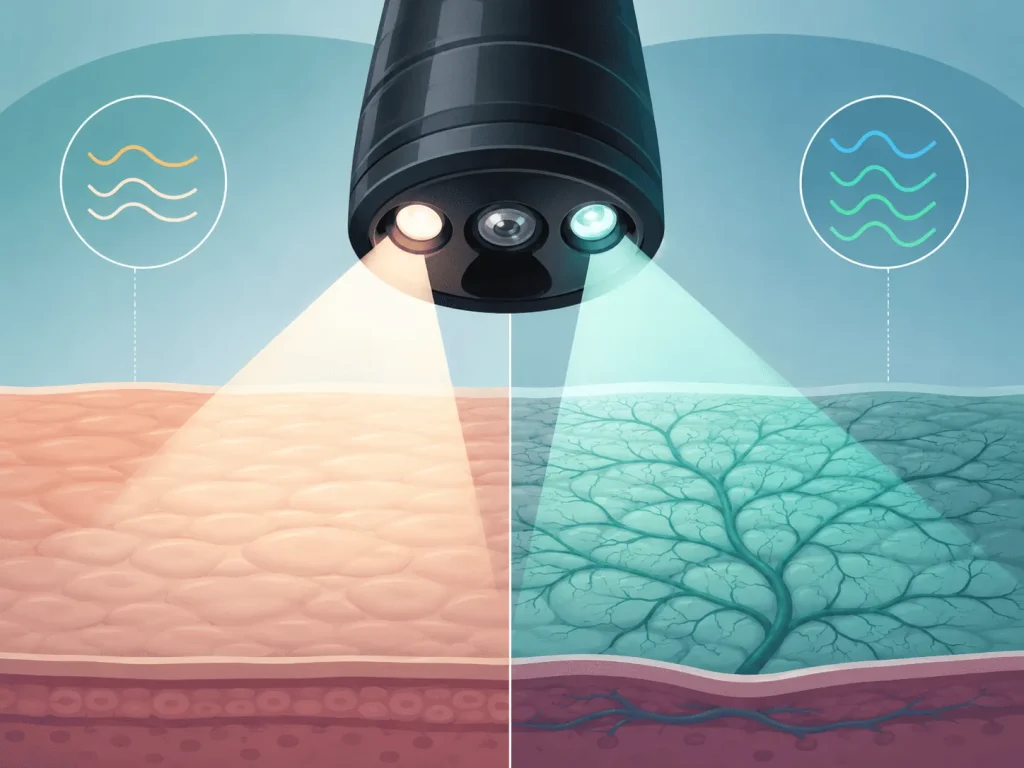
The doctor can often guess the type by looking closely with high-definition endoscopy and narrow band imaging, but the final answer comes from the lab.
What is polypectomy?
Polypectomy simply means removing a polyp. In almost all cases it is done during the same colonoscopy or endoscopy in which the polyp is found, so there is no separate operation and no cut on the body. You will not feel it, because the lining of the bowel does not sense cutting the way skin does.
How polyps are removed
The method depends on the size and shape of the polyp:
- Biopsy forceps: tiny polyps of two or three millimetres can be plucked out with small jaws passed through the endoscope.
- Cold snare: a thin wire loop is placed around the polyp and closed, cutting it off without electricity. This is now the standard for most polyps under one centimetre, and it carries a very low risk of bleeding.
- Hot snare: for larger or stalked polyps, a mild electric current passes through the loop to cut and seal blood vessels at the same time.
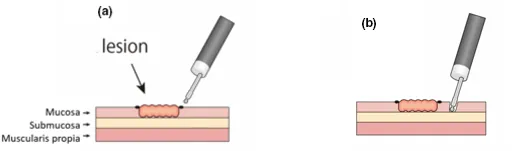
- EMR (endoscopic mucosal resection): for large or flat polyps, fluid is first injected under the polyp to lift it away from the deeper wall, then it is removed with a snare, sometimes in pieces.
- ESD (endoscopic submucosal dissection): for selected large lesions or early cancers that need to be removed in one piece. This is an advanced endoscopy procedure done in hospital.
Clips are sometimes placed on the site to close it or prevent bleeding. They fall off on their own after a few days or weeks and pass out in the stool.
Stomach polyps
Polyps are also found in the stomach, often during an endoscopy for acidity or pain. The commonest are small fundic gland polyps, which are linked with long-term use of acid-reducing tablets and are almost always harmless. Hyperplastic polyps are often linked with H. pylori infection or inflammation, and treating the infection can make them shrink. A few stomach polyps are adenomas and are removed. The doctor will usually take a sample or remove a representative polyp to know which type you have.
Preparing for a colonoscopy with polypectomy
The preparation is the same as for any colonoscopy, and a clean bowel matters even more, because small flat polyps hide easily. Our colonoscopy preparation guide walks you through it. Tell the clinic in advance about blood thinners. Aspirin is often continued. Clopidogrel, warfarin and newer blood thinners may need to be paused for a few days if a large polyp is expected, but only on your doctor's advice. Never stop a blood thinner on your own, especially if you have a heart stent.
Is polypectomy safe?
For small polyps, yes, very. The two main risks are:
- Bleeding: about one in a hundred, more with large polyps or blood thinners. It can happen during the procedure, when it is stopped straight away, or up to two weeks later.
- Perforation (a small tear): rare, and mostly with large flat polyps. Many can be closed with clips during the same procedure.
After you go home, contact the doctor if you pass more than a small amount of blood, feel faint, have severe or worsening abdominal pain, or develop a fever.
After polypectomy
Most people go home the same day. You can eat a light meal once you are fully awake. Avoid heavy lifting and strenuous exercise for a day or two after removal of a large polyp, and avoid long flights for a week if a very large polyp was removed. Do not drive on the day of the test if you had sedation.
Understanding the biopsy report
The removed polyp goes to the lab, and results usually come in about a week. The report will say the type (for example "tubular adenoma" or "hyperplastic polyp"), the grade of any abnormal change (low-grade or high-grade dysplasia), and whether it was removed completely. Very occasionally a polyp already contains early cancer. If it was removed completely with a good margin, that may be all the treatment needed; otherwise further treatment is discussed.
When do I need my next colonoscopy?
This depends on what was found:
- One or two small adenomas: usually after 7 to 10 years.
- Three or four small adenomas: after 3 to 5 years.
- Large adenomas (1 cm or more), high-grade change, or many polyps: after about 3 years.
- A large polyp removed in pieces: a check after about 6 months to make sure nothing is left.
Your doctor will give you a date based on your report and your family history. Keep it, because the whole point of polypectomy is that the follow-up catches anything new before it becomes a problem.
Polyp removal in Delhi
At Medigest, colonoscopy and endoscopy with removal of small polyps are done at our clinic in West Punjabi Bagh, Delhi, using high-definition scopes with narrow band imaging. Large or complex polyps that need EMR or ESD are planned at the clinic and removed in the hospital by Dr. Shrihari Anikhindi, who trained in advanced endoscopy in Japan. Patients come to us from Punjabi Bagh, Paschim Vihar, Rajouri Garden, Janakpuri and across Delhi. You can book a consultation or, if a polyp was found elsewhere, send the report for an online consultation.
A polyp found and removed is a cancer that never got the chance to start. That is about as good as news gets in a colonoscopy room.
Medically reviewed by Dr. Shrihari Anikhindi, MBBS, MD, DNB (Gastroenterology), MRCP (SCE), gastroenterologist and advanced endoscopist at Medigest Gastro, Liver & Endoscopy Clinic, West Punjabi Bagh, Delhi. This article is general information. Please talk to your own doctor about your health.